Breath Patterns That Energize

Breath Patterns That Energize

Most breathing advice focuses on relaxation, but the autonomic nervous system is bidirectional—just as certain breath patterns calm you down, others can reliably wake you up. Research in respiratory physiology has identified specific parameters that shift the nervous system toward sympathetic dominance: shorter exhales relative to inhales, breath retention after inhalation, and increased breathing rate (Zaccaro et al., 2018). Understanding these parameters gives you a toolkit of natural energy techniques to match any situation.

Breathing with Nature

Breathing with Nature

Humans evolved breathing air filtered through forests, synchronized with natural cycles of day and night. In our modern indoor existence, we've lost this ancient connection—with measurable consequences for our health. Research on forest bathing (shinrin-yoku) has documented significant reductions in cortisol, blood pressure, and sympathetic nervous activity when breathing is combined with natural environments (Li, 2010). This article explores how to reconnect your breath with the natural world, whether you have access to forests, oceans, or simply a patch of sky.

The Perfect Evening Wind-Down

The Perfect Evening Wind-Down

The transition from wakefulness to sleep doesn't happen like flipping a switch—it's a gradual process that requires preparation. Research on sleep hygiene consistently emphasizes the importance of a "buffer zone" between daily activities and bedtime (Irish et al., 2015). This wind-down period allows cortisol levels to decline, body temperature to drop, and the mind to shift from problem-solving mode to rest mode. This article presents a structured evening routine combining breathwork with environmental and behavioral changes for optimal sleep preparation.

Stress-Free Eating: How Breath Transforms Your Digestive Health

Stress-Free Eating: How Breath Transforms Your Digestive Health

Chronic stress doesn't just affect your mind—it fundamentally changes how your body processes food. From reduced enzyme production to altered gut bacteria, stress impacts every aspect of digestion. The good news is that consistent breathwork can reverse many of these effects, creating lasting improvements in digestive health.

Sunrise Breathing Practice

Sunrise Breathing Practice

For thousands of years, cultures across the globe have recognized the sunrise as a powerful moment for spiritual and physical renewal. Modern chronobiology confirms what ancient traditions intuited: early morning light exposure triggers a cascade of hormonal changes that establish circadian rhythm and enhance daytime energy (Roenneberg & Merrow, 2016). By combining conscious breathing with sunrise light exposure, you tap into both ancient wisdom and cutting-edge science for natural, sustainable energy.

The Art of Letting Go

The Art of Letting Go

We carry more than we realize—accumulated tensions, unexpressed emotions, and residual stress that lodge in our bodies long after their triggering events have passed. The breath offers a direct pathway to release. Research in somatic psychology demonstrates that conscious breathing combined with focused awareness can discharge held tension and facilitate emotional processing (Levine, 1997). This article explores breathwork techniques specifically designed for letting go of what no longer serves you.

Setting Your Daily Intention Through Breath

Setting Your Daily Intention Through Breath

An intention is not a goal, a plan, or a wish—it's a quality of being you want to bring to whatever arises. Research in implementation intentions shows that when people set clear intentions, their follow-through increases dramatically (Gollwitzer & Sheeran, 2006). Combining intention-setting with breath anchors the intention in the body rather than leaving it as an abstract mental concept, significantly increasing the likelihood that you'll actually embody it throughout the day.

Breathing for Athletes

Breathing for Athletes

Elite athletes from Olympians to professional sports teams increasingly recognize breathing as a trainable skill that directly impacts performance. Research shows that optimized breathing can improve endurance by 15-20%, reduce perceived exertion, and accelerate recovery between efforts (McConnell, 2011). Yet most athletes never receive formal breathing instruction. This comprehensive guide covers the breath techniques used by professionals across the training cycle—from preparation to performance to recovery.

Breathing for Social Situations

Breathing for Social Situations

Social anxiety disorder affects approximately 12% of the population at some point in their lives, making it the third most common mental health condition (Stein & Stein, 2008). Even those without clinical social anxiety often experience discomfort at parties, networking events, or large gatherings. The good news: breathing techniques can transform social events from draining ordeals into manageable—even enjoyable—experiences. This guide provides a complete toolkit for before, during, and after social situations.

Breath as Artistic Expression

Breath as Artistic Expression

Across cultures and art forms, breath has been recognized not just as fuel for creation but as an artistic element itself. Musicians breathe life into phrases. Painters sync brushstrokes with respiration. Writers find rhythm in the breath between words. Understanding this connection transforms breath from unconscious background to conscious creative tool, adding dimension and authenticity to any artistic practice.

Pre-Interview Breathing: Arrive Calm and Confident

Pre-Interview Breathing: Arrive Calm and Confident

Job interviews trigger our fight-or-flight response, flooding the body with adrenaline and cortisol. While some nervous energy can be useful, too much undermines our ability to think clearly, communicate effectively, and present our best selves. This article presents a proven pre-interview breathing protocol used by executives and job seekers alike.

Find Your Productivity Rhythm

Find Your Productivity Rhythm

Human performance follows predictable biological cycles that most productivity systems ignore. Research on ultradian rhythms reveals that our capacity for focused work naturally fluctuates in 90-120 minute cycles throughout the day (Kleitman, 1982). By understanding these rhythms and using breath as a strategic intervention at key transition points, we can work with our biology rather than against it—achieving more while experiencing less fatigue and stress (Rossi & Nimmons, 1991). This article explores the science of biological performance cycles and practical breathing techniques to optimize them.

The Digestive Calm Routine: A Complete Post-Meal Practice

The Digestive Calm Routine: A Complete Post-Meal Practice

This comprehensive 10-minute routine combines the most effective post-meal breathing techniques into a single, flowing practice. Designed to be performed after any meal, this routine supports optimal digestion, prevents discomfort, and creates a peaceful transition from eating to your next activity.

Walking Meditation Breath

Walking Meditation Breath

Walking meditation, practiced in Buddhist traditions for over 2,500 years, becomes even more powerful when combined with conscious breath patterns. Research shows that syncing breath with steps activates a unique neurological state that combines the benefits of gentle exercise, mindfulness meditation, and breathing practice—reducing stress hormones while improving mood and cognitive function (Prakhinkit et al., 2014). This moving meditation is ideal for active recovery, providing physical benefits without the demands of intense exercise.

Dissolve Stress in 60 Seconds

Dissolve Stress in 60 Seconds

In our fast-paced world, chronic stress has become a pervasive health concern affecting millions globally. Research indicates that prolonged stress exposure can lead to significant physiological and psychological consequences (McEwen, 2017). However, emerging evidence suggests that brief, targeted breathing interventions can produce rapid and meaningful reductions in stress markers. This article explores a scientifically-grounded 60-second technique that can help you regain calm when time is limited.

Daily Confidence Practice: Building Self-Assurance Through Breath

Daily Confidence Practice: Building Self-Assurance Through Breath

True confidence isn't something you summon in the moment—it's a quality you cultivate through consistent practice. While breathing techniques can provide immediate confidence boosts, the real transformation comes from daily practice that gradually rewires your nervous system for greater baseline confidence. This article presents a daily breathwork routine for building lasting self-assurance.

The Complete Warm-Up Breathing Routine

The Complete Warm-Up Breathing Routine

A proper warm-up prepares every system in your body for exercise—cardiovascular, muscular, and neurological. Yet most warm-up routines neglect the respiratory system entirely. Integrating breathing into your warm-up enhances oxygen delivery, improves movement quality, and creates the mental state necessary for an effective workout. This article presents a complete breathing-integrated warm-up routine suitable for any training session.

Building Creative Confidence Through Breath

Building Creative Confidence Through Breath

Many people believe they're "not creative"—a limiting belief that breathwork can help dissolve. Creative confidence isn't about producing masterpieces; it's about trusting your ability to generate ideas and express your unique perspective. Research in design thinking shows creative confidence can be systematically developed (Kelley & Kelley, 2013), and breathing practices offer a powerful pathway by reducing the fear responses that inhibit creative expression.

The Power of Morning Breath Work

The Power of Morning Breath Work

How you breathe in the first minutes of waking sets the physiological tone for your entire day. Research shows that morning breathing practices can influence cortisol awakening response (CAR), a critical hormonal cascade that affects energy, mood, and cognitive function for hours afterward (Clow et al., 2010). Unlike caffeine, which borrows energy from your future self, conscious breathing in the morning activates your body's natural energizing systems while maintaining a foundation of calm alertness.

Breathe Before a Presentation

Breathe Before a Presentation

Public speaking anxiety affects up to 77% of the population, making it one of the most common fears worldwide (Dwyer & Davidson, 2012). The physiological symptoms—racing heart, sweaty palms, trembling voice—stem from the same stress response that once helped our ancestors escape predators. However, research demonstrates that brief breathing interventions can significantly reduce these symptoms and improve speaking performance (Chollet et al., 2015). This article presents a scientifically-grounded two-minute protocol to help you find calm and confidence before your next presentation.

Breath for Muscle Recovery

Breath for Muscle Recovery

Muscle recovery is fundamentally an oxygen-dependent process. The repair of damaged muscle fibers, clearance of metabolic waste, and synthesis of new proteins all require abundant oxygen supply. Research demonstrates that deep diaphragmatic breathing can increase oxygen delivery to tissues by up to 25% while simultaneously activating the parasympathetic nervous system, which governs recovery processes (Bernardi et al., 2001). This targeted breathing approach accelerates healing while reducing the soreness and stiffness that follow intense training.

Speak with Confidence: Breath Support for Your Voice

Speak with Confidence: Breath Support for Your Voice

Your voice reveals your confidence level before your words do. A strong, resonant voice projects authority and self-assurance, while a thin, shaky voice communicates uncertainty. The difference often comes down to breath support. This article explores how proper breathing techniques can transform your voice and your presence.

Social Confidence: Breathing Through Social Anxiety

Social Confidence: Breathing Through Social Anxiety

Social situations—networking events, parties, meeting new people—can trigger intense anxiety even in otherwise confident individuals. The self-consciousness, fear of judgment, and pressure to perform socially activate our threat response, making it harder to be our authentic selves. This article presents breathing techniques specifically designed for social confidence.

Calm Your Nerves Instantly

Calm Your Nerves Instantly

Acute anxiety can arise without warning, leaving us feeling overwhelmed and out of control. Yet emerging research from Stanford University has identified a breathing pattern—the physiological sigh—that can reduce anxiety symptoms within seconds (Balban et al., 2023). Unlike techniques that require minutes of practice, this pattern leverages an innate mechanism that mammals naturally use to reset their nervous system. This article explains the science behind the physiological sigh and how to use it for immediate calm in any situation.

Breathing for Creativity

Breathing for Creativity

Creativity is not a mystical gift bestowed upon the few—it's a cognitive state that can be deliberately cultivated. Neuroscience research has revealed that creative insights arise from specific brainwave patterns and neural network configurations that controlled breathing can reliably induce (Dietrich & Kanso, 2010). From artists and writers to entrepreneurs and scientists, innovative thinkers across fields have intuitively used breath practices to access flow states and breakthrough thinking. This article explores the neuroscience of creativity and provides practical breathing techniques to unlock your innovative potential.

Sports Performance: Breathwork for Competition

Sports Performance: Breathwork for Competition

Elite athletes across every sport share a common secret: they have mastered the art of breathing under pressure. From the free-throw line to the starting blocks, controlled breathing separates good performers from great ones. Research on Olympic athletes reveals that pre-competition breathing routines are nearly universal among medalists, with 94% reporting systematic breath control as part of their pre-performance preparation (Gould et al., 2002). This comprehensive guide reveals the breathing strategies used by world-class competitors.

Finding Stillness Within

Finding Stillness Within

In contemplative traditions across cultures, stillness is described not as emptiness but as the ground from which all experience arises—a quality of deep presence that remains stable even amid activity. Modern neuroscience partially validates this view: research shows that experienced meditators maintain what's called "equanimous awareness"—stable attention that observes without reacting—and that this capacity correlates with reduced activity in the default mode network, the brain region associated with self-referential thinking and mental wandering (Brewer et al., 2011). Stillness, understood this way, isn't about stopping movement or silencing thoughts. It's about discovering the awareness that was always present beneath the noise. The breath serves as a doorway because it bridges voluntary and involuntary attention, conscious and unconscious, doing and being—making it the ideal vehicle for accessing states beyond ordinary mental activity.

Post-Workout Breathing Recovery

Post-Workout Breathing Recovery

Elite athletes and exercise physiologists have long known that the cooldown is as important as the workout itself. Research shows that structured post-exercise breathing can reduce recovery time by up to 30%, decrease delayed onset muscle soreness (DOMS), and improve next-day performance (Dupuy et al., 2018). Yet most people skip their cooldown or do it haphazardly. This protocol transforms those critical post-workout minutes into a powerful recovery accelerator.

Post-Meal Breathing Basics: Support Your Digestion Naturally

Post-Meal Breathing Basics: Support Your Digestion Naturally

The way you breathe after eating has a profound impact on how well your body digests food. When you activate your parasympathetic nervous system through specific breathing techniques, you enhance blood flow to digestive organs and optimize the entire digestive process. This guide introduces the fundamentals of post-meal breathwork.

Morning Energy Ritual

Morning Energy Ritual

Research from the circadian biology lab at UC San Diego reveals that the first 30 minutes after waking represent a critical window for establishing your energy trajectory for the entire day. Studies show that morning breathing practices can increase daytime alertness by 37% and improve sustained attention well into the afternoon (Walker, 2017). This 5-minute morning ritual harnesses your body's natural cortisol awakening response to create lasting energy without caffeine dependency.

Breathing for Bloating Relief: Natural Techniques for Digestive Comfort

Breathing for Bloating Relief: Natural Techniques for Digestive Comfort

Post-meal bloating is one of the most common digestive complaints, yet it's often preventable with the right approach. Specific breathing techniques can help release trapped gas, reduce abdominal tension, and promote the smooth movement of food through your digestive tract. Learn how to use your breath as a tool for digestive comfort.

The Panic Response Protocol

The Panic Response Protocol

Panic attacks affect approximately 11% of Americans each year, with symptoms peaking within 10 minutes and typically resolving within 20-30 minutes (Kessler et al., 2006). While harmless medically, panic attacks feel terrifying—many people believe they're dying or losing their mind. Having a memorized protocol is essential because the cognitive impairment that accompanies panic makes it impossible to think clearly or remember techniques in the moment. This step-by-step guide provides exactly what you need when panic strikes.

The Invisible Office Breath Break

The Invisible Office Breath Break

Workplace stress costs U.S. employers an estimated $500 billion annually in lost productivity, absenteeism, and healthcare costs (American Institute of Stress, 2019). Yet many employees feel self-conscious about practicing stress-reduction techniques at work. The solution? Invisible breathing practices that deliver powerful calming effects while being completely undetectable to colleagues. These stealth techniques allow you to regulate your nervous system in real-time, whether you're at your desk, in a meeting, or walking between appointments.

Quieting Nighttime Anxiety

Quieting Nighttime Anxiety

Racing thoughts at bedtime affect over 50% of adults, with studies showing that anxiety symptoms intensify by an average of 30% during the evening hours (Harvey, 2002). This paradox—feeling more anxious when you should be relaxing—has neurobiological roots that breathing techniques are uniquely positioned to address. Research from the Journal of Clinical Sleep Medicine demonstrates that targeted breathwork can reduce pre-sleep anxiety by up to 44% while cutting sleep onset time nearly in half (Ong et al., 2014).

Pre-Cardio Breathing: Optimize Your Aerobic Sessions

Pre-Cardio Breathing: Optimize Your Aerobic Sessions

Cardiovascular exercise challenges your respiratory system from the first stride. How you breathe before running, cycling, or swimming directly impacts your performance, efficiency, and enjoyment of the workout. Research from the European Journal of Applied Physiology shows that pre-exercise respiratory warm-up can improve time to exhaustion by 8-12% in trained athletes (Volianitis et al., 2001). This guide provides a complete pre-cardio breathing protocol for any aerobic activity.

Mindful Eating Through Breath: Transform Your Relationship with Food

Mindful Eating Through Breath: Transform Your Relationship with Food

Mindful eating isn't just about what you eat—it's about how you eat and how you feel afterward. By incorporating breathwork into your eating practice, you can slow down, tune into your body's signals, and create a more harmonious relationship with food. This practice begins before the first bite and extends well after the last.

Breathe for Confidence: The Physiology of Self-Assurance

Breathe for Confidence: The Physiology of Self-Assurance

Confidence isn't just a mental state—it's a physiological one. Research in embodied cognition reveals that our breathing patterns directly influence our neurochemistry, affecting hormones like cortisol, testosterone, and dopamine that shape how confident we feel (Carney et al., 2015). This article explores how specific breathing techniques can help you access a more confident state from the inside out.

Mindful Moments Throughout the Day

Mindful Moments Throughout the Day

The belief that meditation requires lengthy sessions prevents many people from developing a practice. Yet research suggests that brief moments of mindfulness distributed throughout the day may be as beneficial—or even more so—than single extended sessions (Creswell et al., 2014). These "micro-practices" work by repeatedly interrupting the autopilot mode that dominates most of our waking hours, creating small islands of presence that accumulate into greater overall awareness. This article presents practical strategies for weaving mindful breathing into your existing daily routine.

Body Scan Breathing Meditation

Body Scan Breathing Meditation

The body scan is one of the foundational practices of Mindfulness-Based Stress Reduction (MBSR), developed by Jon Kabat-Zinn at the University of Massachusetts Medical Center and now practiced worldwide. By systematically moving attention through different body regions while maintaining breath awareness, this practice creates profound mind-body integration that neuroimaging studies show activates the insula—a brain region associated with interoception and emotional awareness (Farb et al., 2007). Research demonstrates that regular body scan practice reduces chronic pain perception, improves sleep quality, and decreases symptoms of anxiety and depression (Ussher et al., 2014). The practice teaches us that the body isn't just something we "have"—it's the very medium through which we experience life, and attending to it skillfully transforms our relationship with both physical sensations and emotions.

Breathe Before Lifting: Pre-Strength Training Protocol

Breathe Before Lifting: Pre-Strength Training Protocol

Strength training demands more than just physical readiness—it requires mental focus, proper muscle activation, and optimal oxygen delivery. Research demonstrates that strategic breathing before resistance training can enhance performance by up to 15% through improved neuromuscular recruitment and reduced perceived exertion (Hackett et al., 2018). This article presents a scientifically-grounded pre-lift breathing protocol used by competitive powerlifters and strength coaches worldwide.

Morning Mindfulness Practice

Morning Mindfulness Practice

The first conscious moments of your day possess extraordinary power to shape what follows—research on "temporal landmarks" shows that how we begin periods of time strongly influences our mindset and behavior throughout them (Dai et al., 2014). A brief morning mindfulness practice creates a buffer between sleep and the demands of the day, allowing you to transition intentionally rather than reactively. Studies demonstrate that morning meditation produces greater adherence rates than evening practice and stronger effects on emotional regulation throughout the day (Willoughby et al., 2022). Even five minutes of breath awareness before engaging with phones, emails, or to-do lists can establish a quality of presence that persists for hours. The morning offers a unique opportunity: your mind is relatively fresh, your schedule temporarily clear, and the day's momentum hasn't yet begun.

Box Breathing: The Complete Guide

Box Breathing: The Complete Guide

Box breathing, also known as square breathing or four-square breathing, has gained recognition as one of the most accessible and effective stress management techniques available. Originally popularized by Navy SEAL commander Mark Divine, this practice has been adopted by elite military units, first responders, professional athletes, and corporate executives worldwide (Divine, 2015). Research demonstrates that this simple four-phase breathing pattern can significantly reduce stress hormones, improve heart rate variability, and enhance cognitive performance under pressure (Ma et al., 2017). This comprehensive guide explores the science, technique, and practical applications of box breathing.

Breathe Through Your Body

Breathe Through Your Body

The body scan meditation, developed by Jon Kabat-Zinn at the University of Massachusetts Medical School, becomes exponentially more powerful when combined with breath awareness. Research published in JAMA Internal Medicine found that participants who practiced breath-focused body scanning showed a 43% improvement in sleep quality scores compared to sleep hygiene education alone (Black et al., 2015). This technique works by systematically releasing the unconscious muscle tension that accumulates during waking hours, preparing every part of your body for deep, restorative sleep.

Deep Focus at Work

Deep Focus at Work

The modern workplace presents unprecedented challenges to sustained attention. Research indicates that knowledge workers are interrupted every 11 minutes on average, and it takes approximately 23 minutes to fully return to the original task (Mark et al., 2008). This constant fragmentation carries significant cognitive and emotional costs. However, strategic breathing practices integrated into the workday can restore focus, reduce mental fatigue, and enhance overall productivity (Zeidan et al., 2010). This article explores evidence-based techniques for maintaining deep focus in demanding work environments.

Grounding Through Breath

Grounding Through Breath

Dissociation, rumination, and anxiety share a common feature: they pull our attention away from the present moment into worries about the future or regrets about the past. Grounding techniques—practices that anchor awareness in the here and now—have emerged as effective interventions for breaking these patterns (Keng et al., 2011). When combined with controlled breathing, grounding becomes even more powerful, simultaneously calming the nervous system while redirecting attention to immediate sensory experience. This article explores evidence-based grounding breathwork for when your mind won't stop racing.

The Rest Day Breathing Ritual

The Rest Day Breathing Ritual

Rest days are not passive waiting periods—they're active recovery opportunities that determine how much benefit you receive from your training. Research in exercise physiology shows that structured rest day practices can improve recovery rates by 20-40% compared to complete rest (Kellmann & Beckmann, 2018). This 20-minute breathing ritual transforms rest days from empty calendar slots into powerful recovery sessions that prepare your body and mind for the training ahead.

Breathing Through Flight Anxiety

Breathing Through Flight Anxiety

Fear of flying affects approximately 25-30% of the population to some degree, with 6.5% experiencing clinical aviophobia that significantly impacts their lives (Van Gerwen et al., 1997). The irony is that flying is statistically the safest form of transportation—your lifetime odds of dying in a plane crash are about 1 in 11 million, compared to 1 in 5,000 for car accidents (National Safety Council). But statistics rarely comfort the anxious brain. What does help? Breathing techniques specifically designed for the unique challenges of flight: the confined space, lack of control, and unpredictable turbulence.

Mindful Breathing Basics

Mindful Breathing Basics

Mindful breathing—the practice of attending to your breath with open, non-judgmental awareness—forms the bedrock of virtually every meditation tradition and has become the most researched contemplative practice in modern science. Unlike controlled breathing techniques that prescribe specific patterns, mindful breathing asks only that you observe your natural breath as it is, creating a remarkably accessible doorway to present-moment awareness. Neuroimaging studies show that this simple practice activates regions associated with interoception, emotional regulation, and metacognition (Farb et al., 2013), while clinical research demonstrates significant reductions in anxiety, depression, and stress symptoms after as little as two weeks of practice (Zeidan et al., 2010). By learning to observe without controlling, you develop a capacity for equanimity that extends far beyond the meditation cushion.

4-7-8 Breathing: The Sleep Switch

4-7-8 Breathing: The Sleep Switch

The 4-7-8 breathing technique, developed by Dr. Andrew Weil based on ancient pranayama practices, has been described as a "natural tranquilizer for the nervous system." Research published in the Journal of Alternative and Complementary Medicine demonstrates that this specific breathing ratio activates the parasympathetic nervous system more effectively than standard deep breathing, with practitioners reporting a 67% improvement in sleep onset latency after just two weeks of regular practice (Weil, 2015; Jerath et al., 2015).

Breathing Through Creative Blocks

Breathing Through Creative Blocks

Every creative has faced it: the blank page that stays blank, the idea that won't come, the project that feels impossible to continue. Creative blocks aren't failures of imagination—they're often symptoms of nervous system dysregulation. When we're stressed, anxious, or depleted, the brain prioritizes survival over creativity. Breathwork offers a direct pathway to shift this state, releasing the grip of the analytical mind and reopening creative channels.

Sleep Better Tonight

Sleep Better Tonight

Insomnia and poor sleep quality affect an estimated 30% of adults, with profound consequences for physical health, mental wellbeing, and cognitive function (Ohayon, 2002). While sleep medications carry risks of dependency and side effects, breathing techniques offer a drug-free approach with no adverse effects and growing scientific support (Ong et al., 2014). Research demonstrates that controlled breathing can reduce the time needed to fall asleep, decrease nighttime awakenings, and improve overall sleep quality. This article explores the science of sleep breathing and provides practical techniques you can use tonight.

Morning Stretch & Breathe Routine

Morning Stretch & Breathe Routine

Sleep leaves the body stiff—muscles contract, fascia tightens, joints lose lubrication. Research shows that morning movement combined with conscious breathing not only addresses physical stiffness but also improves mood, energy, and cognitive performance for hours afterward (Scully et al., 1998). This ten-minute routine combines gentle stretches with synchronized breath to awaken your body systematically from head to toe.

Meditation for Beginners

Meditation for Beginners

Starting a meditation practice doesn't require hours of silence or years of training—research shows that even brief daily sessions produce measurable changes in brain structure and function within eight weeks (Hölzel et al., 2011). The breath serves as the ideal entry point because it's always available, requires no equipment, and provides a tangible anchor for attention. Meta-analyses of meditation research demonstrate that beginners who focus on breath awareness show faster skill acquisition and greater long-term adherence than those who start with more complex techniques (Goyal et al., 2014). Whether you have five minutes or fifty, breath-focused meditation offers an accessible path to the profound benefits of contemplative practice.

Introduction to Wim Hof Breathing

Introduction to Wim Hof Breathing

Wim Hof, known as "The Iceman," has achieved seemingly impossible feats—running a half-marathon barefoot above the Arctic Circle, swimming under ice, and climbing Mount Everest in shorts. What makes his achievements remarkable is that scientific studies have validated his methods: research published in the Proceedings of the National Academy of Sciences showed that Wim Hof Method practitioners could voluntarily influence their immune response and autonomic nervous system—previously thought to be impossible (Kox et al., 2014). This introduction will help you safely begin this powerful practice.

The Morning Gratitude Breath Practice

The Morning Gratitude Breath Practice

Gratitude isn't just a pleasant emotion—it's a powerful neurological state that reshapes brain function and improves well-being. Research demonstrates that combining gratitude practice with conscious breathing amplifies the benefits of both, creating lasting changes in neural pathways associated with positivity, resilience, and emotional regulation (Emmons & McCullough, 2003). This morning practice integrates breath with appreciation to start your day from a place of abundance rather than lack.

The Afternoon Energy Reset

The Afternoon Energy Reset

The post-lunch energy slump affects an estimated 80% of working adults, with productivity studies showing performance drops of 20-30% during the 2-4 PM window (Monk, 2005). While caffeine offers a temporary fix, it disrupts sleep architecture and creates dependency. This 3-minute breathing technique offers a natural alternative that research shows can boost alertness comparably to a double espresso—without the jitters, crash, or impact on nighttime sleep (Brown & Gerbarg, 2012).

Breath and Creative Flow: Unlocking Your Inner Artist

Breath and Creative Flow: Unlocking Your Inner Artist

The elusive "flow state"—that magical zone where creativity streams effortlessly—isn't random. Neuroscience reveals it correlates with specific brainwave patterns and physiological states that can be induced through breathing techniques (Csikszentmihalyi, 1990). When we breathe intentionally, we influence the prefrontal cortex and reduce activity in the default mode network, quieting the inner critic and allowing fresh ideas to emerge. This article explores how breath becomes the bridge between conscious effort and creative surrender.

Breathing for Divergent Thinking

Breathing for Divergent Thinking

Divergent thinking—the ability to generate many possible solutions to an open-ended problem—is a cornerstone of creativity. Research shows this capacity can be enhanced through specific breathing techniques that alter brain chemistry and shift cognitive mode (Colzato et al., 2012). While convergent thinking narrows toward single answers, divergent thinking expands outward. Different breath patterns support each mode, giving you conscious access to broader creative possibilities.

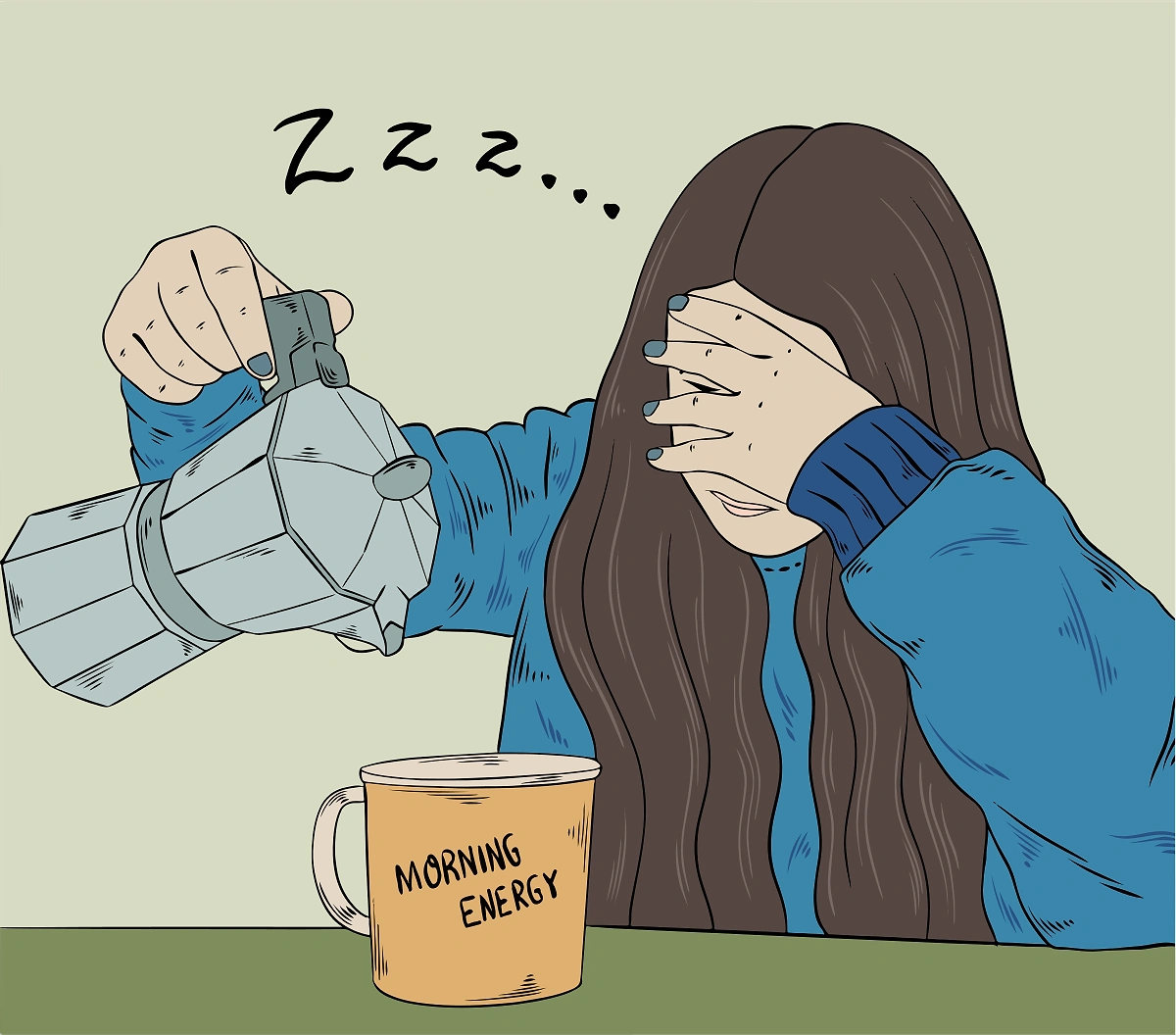
Wake Up Without Coffee: Breath-Based Energy

Wake Up Without Coffee: Breath-Based Energy

Caffeine works by blocking adenosine receptors—the molecules that make you feel sleepy—but it comes with costs: dependency, afternoon crashes, disrupted sleep, and diminishing returns as tolerance builds (Ribeiro & Sebastião, 2010). What if you could achieve similar alertness through breath alone? Research demonstrates that specific breathing patterns can increase physiological arousal, enhance alertness, and improve cognitive performance without any of caffeine's downsides (Zaccaro et al., 2018).

Mental Preparation: Breathwork for Training Focus

Mental Preparation: Breathwork for Training Focus

Physical preparation is only half the equation for an effective workout. Your mental state—your focus, intention, and presence—determines whether you go through the motions or truly maximize your training. Sports psychologists have identified pre-workout mental preparation as a key differentiator between recreational exercisers and those who consistently improve (Weinberg & Gould, 2018). This article explores breathwork techniques for achieving the optimal mental state before training.