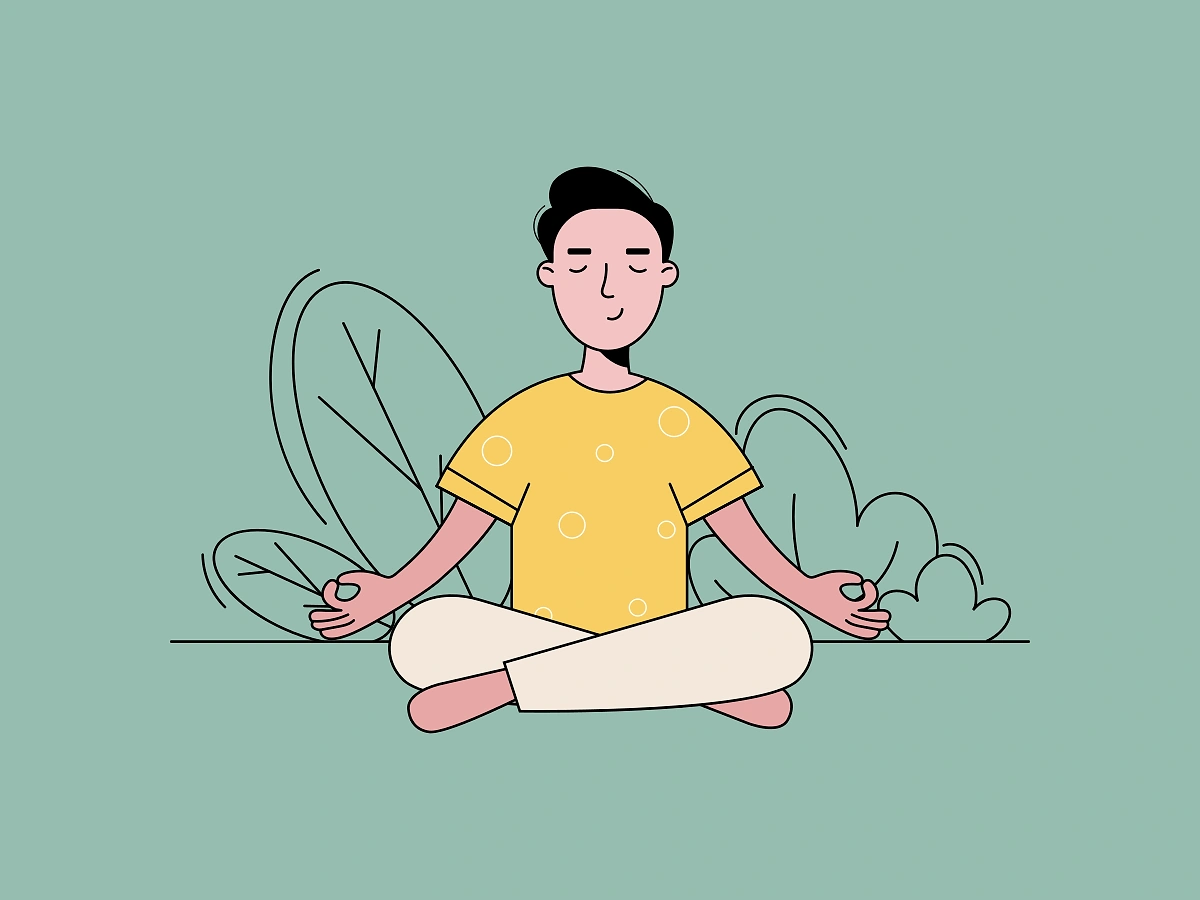
Dissociation, rumination, and anxiety share a common feature: they pull our attention away from the present moment into worries about the future or regrets about the past. Grounding techniques—practices that anchor awareness in the here and now—have emerged as effective interventions for breaking these patterns (Keng et al., 2011). When combined with controlled breathing, grounding becomes even more powerful, simultaneously calming the nervous system while redirecting attention to immediate sensory experience. This article explores evidence-based grounding breathwork for when your mind won't stop racing.
Understanding Grounding
Grounding refers to any practice that brings attention back to the present moment and the physical body. In clinical settings, grounding techniques are used to help individuals experiencing anxiety, panic attacks, dissociation, and trauma responses (Najavits, 2002). The effectiveness of grounding lies in its ability to interrupt the cycle of catastrophic thinking by redirecting attention to neutral or pleasant sensory information.
Why Breath and Senses Together
Combining breath awareness with sensory grounding creates a synergistic effect. The controlled breathing activates the parasympathetic nervous system, creating physiological calm, while the sensory focus provides an anchor for attention that competes with anxious thoughts. Together, they create a more complete intervention than either practice alone.
The 5-4-3-2-1 Breathing Technique
This technique combines the classic 5-4-3-2-1 sensory grounding exercise with deep breathing. Unlike the traditional version done quickly, this breathwork version moves slowly, using breath as the pace-setter for sensory exploration.
How to Practice
Begin with three slow, deep breaths to settle. Then: Take 5 slow breaths while noticing 5 things you can see, really looking at each one. Take 4 slow breaths while noticing 4 things you can physically feel (your feet in shoes, air on skin, clothes on body). Take 3 slow breaths while noticing 3 things you can hear, including subtle background sounds. Take 2 slow breaths while noticing 2 things you can smell (or imagine smelling). Take 1 final slow breath while noticing 1 thing you can taste (or the current taste in your mouth).
Related Articles

Calm Your Nerves Instantly

Breathing with Nature

Mindful Moments Throughout the Day
References
Chevalier, G., Sinatra, S. T., Oschman, J. L., Sokal, K., & Sokal, P. (2012). Earthing: Health implications of reconnecting the human body to the Earth's surface electrons. Journal of Environmental and Public Health, 2012, 291541.
Keng, S. L., Smoski, M. J., & Robins, C. J. (2011). Effects of mindfulness on psychological health: A review of empirical studies. Clinical Psychology Review, 31(6), 1041-1056.
Najavits, L. M. (2002). Seeking Safety: A Treatment Manual for PTSD and Substance Abuse. Guilford Press.
Was this article helpful?