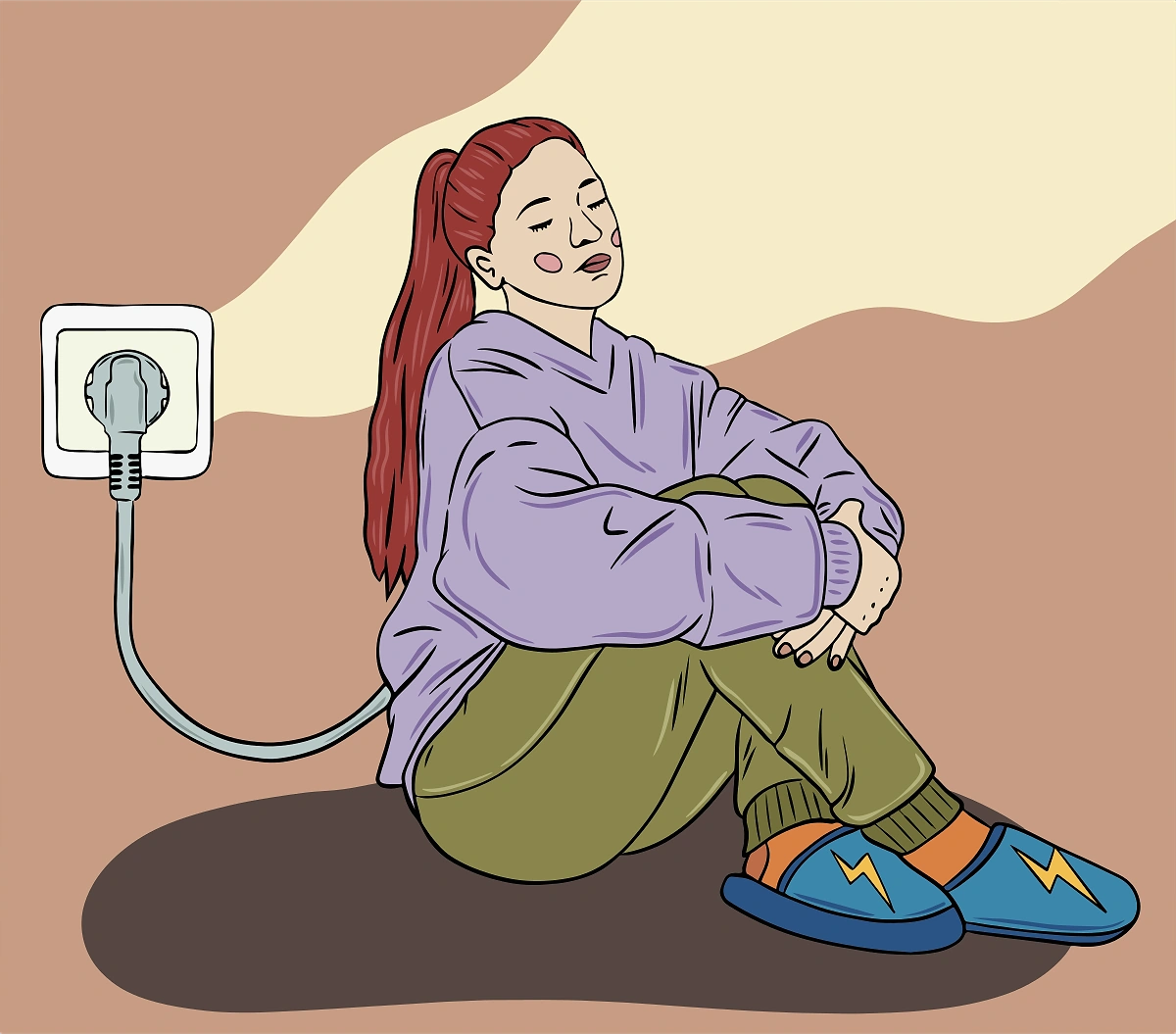
Most breathing advice focuses on relaxation, but the autonomic nervous system is bidirectional—just as certain breath patterns calm you down, others can reliably wake you up. Research in respiratory physiology has identified specific parameters that shift the nervous system toward sympathetic dominance: shorter exhales relative to inhales, breath retention after inhalation, and increased breathing rate (Zaccaro et al., 2018). Understanding these parameters gives you a toolkit of natural energy techniques to match any situation.
The Science of Energizing Breath
Your autonomic nervous system operates as a seesaw between sympathetic (activating) and parasympathetic (calming) branches. Most relaxation breathing lengthens the exhale to stimulate the vagus nerve and activate parasympathetic dominance. Energizing breathing does the opposite: it tips the balance toward sympathetic activation, increasing heart rate, blood pressure, and alertness—the same changes that occur during physical exercise or excitement (Brown & Gerbarg, 2012).
The Three Levers
Three variables determine whether a breath pattern is energizing or calming:
1. Inhale-to-Exhale Ratio: Longer exhales = calming; shorter exhales = energizing. A 4:2 inhale-to-exhale ratio activates sympathetic dominance.
2. Breath Hold Placement: Holding after inhale creates a slight pressure increase and CO2 buildup that triggers alertness. Holding after exhale is more calming.
3. Breathing Rate: Faster rates (above 15 breaths per minute) shift toward sympathetic activation. The optimal calming rate is around 6 breaths per minute.
Pattern 1: The 4-4-2 Energizer
This pattern uses all three levers simultaneously: it features a breath hold after inhale, a shortened exhale, and a faster overall rate than calming patterns.
How to Practice
Inhale: Breathe in through your nose for 4 counts, filling your lungs completely.
Hold: Retain the breath for 4 counts. Feel the slight pressure and fullness in your chest.
Exhale: Release through your nose for just 2 counts—a quick, controlled release, not a forced push.
Immediately begin the next inhale. No pause after exhale.
Continue for 10-12 cycles (approximately 2 minutes). You should notice increased alertness, warmth, and possibly a slight elevation in heart rate.
Try This Exercise
2-1-2 Energize
Energizing Breath2 min
Ready to feel more alive?
2s In
2s Out
Pattern 2: Bellows Breath (Bhastrika)
This traditional yogic technique creates rapid, rhythmic breaths that dramatically increase oxygen intake and stimulate the nervous system. It's more intense than the 4-4-2 pattern and produces stronger effects.
How to Practice
Position: Sit tall with hands on knees or lower belly to feel the diaphragm movement.
Technique: Breathe rapidly in and out through your nose with equal force on both inhale and exhale. Unlike Kapalbhati (which emphasizes only the exhale), bellows breath uses the full diaphragm actively in both directions.
Rhythm: Aim for 2-3 breath cycles per second. The sound should be like bellows fanning a fire—rhythmic and vigorous.
Duration: Begin with 15-20 breaths, followed by 3 slow recovery breaths. Experienced practitioners can do 2-3 rounds.
Pattern 3: The Physiological Sigh Reverse
The physiological sigh (double inhale + long exhale) is nature's calming mechanism. The reverse pattern—single inhale followed by a sharp, short exhale—produces an energizing effect.
How to Practice
Inhale fully: One complete breath through the nose, filling the lungs to about 80% capacity.
Sharp exhale: A quick, forceful exhale through the mouth—like blowing out a candle at arm's length. Release only about 50% of the air.
Immediately inhale again: Don't pause or settle; begin the next breath right away.
Continue for 10-15 cycles. This pattern creates an invigorating, "wake-up" sensation.
Pattern 4: Power Breathing
Developed for athletic performance, power breathing combines breath mechanics with body posture to maximize energizing effects.
How to Practice
Standing position: Feet shoulder-width apart, slight bend in knees, arms hanging loosely.
The sequence: 1. Inhale through nose for 2 counts while raising arms overhead 2. Hold breath for 1 count at the top, arms extended 3. Exhale forcefully through mouth for 1 count while bringing arms down sharply 4. Immediately repeat
The arm movement combined with breath creates a full-body energizing effect. Perform 10 repetitions as a quick pick-me-up.
Choosing the Right Pattern
Different situations call for different levels of activation:
4-4-2 Pattern: Gentle energy boost suitable for office use or mid-day refresh
Reverse Sigh: Quick alertness before meetings or important conversations
Bellows Breath: Strong activation for morning energy or pre-workout
Power Breathing: Full-body energizing before physical activity
Safety and Contraindications
Energizing breath patterns temporarily increase heart rate and blood pressure. While safe for healthy adults, they require caution in certain situations. Avoid these techniques if you have uncontrolled hypertension, heart disease, are pregnant, or have epilepsy. Always practice seated or standing in a safe location—lightheadedness can occur, especially with bellows breath. If you feel dizzy, stop immediately and return to normal breathing.
Timing Considerations
Energizing breath patterns are best used in the first half of the day. Practicing within 3 hours of bedtime may interfere with sleep onset. If you need energy in the evening but also need to sleep later, use the gentler 4-4-2 pattern rather than more intense techniques, and follow with 2-3 calming breaths afterward.
Creating Your Personal Energy Protocol
With multiple energizing patterns now in your toolkit, the next step is developing a personalized protocol that matches your lifestyle and energy needs. Consider your typical day: when do energy dips most commonly occur? What activities require peak alertness? Some practitioners develop a morning ritual using power breathing, a midday reset with 4-4-2 patterns, and the reverse sigh for quick boosts before important meetings. Experiment with different combinations over several weeks, paying attention to which patterns resonate most strongly with your physiology and schedule.
Stacking Patterns for Maximum Effect
Advanced practitioners often stack multiple patterns in sequence for particularly demanding situations. For example, before an important presentation or athletic event, you might begin with 2 minutes of bellows breath to build momentum, transition to the 4-4-2 energizer to maintain activation, and finish with power breathing to lock in the state. The key is learning your personal response to each technique so you can combine them intelligently. Start by mastering each pattern individually before attempting combinations.
Conclusion
The breath is a bidirectional dial for the nervous system—turn it one way for calm, the other for energy. By understanding the three levers (inhale-exhale ratio, hold placement, and breathing rate), you can design breath patterns for any energetic need. The 4-4-2 pattern offers gentle activation suitable for everyday use, while bellows breath and power breathing provide stronger effects for more demanding situations. Master these patterns and you'll never need to rely solely on caffeine again—your breath becomes an on-demand energy source available anytime, anywhere.
Related Articles
The Afternoon Energy Reset
Morning Energy Ritual
Introduction to Wim Hof Breathing
References
Brown, R. P., & Gerbarg, P. L. (2012). The Healing Power of the Breath. Shambhala Publications.
Porges, S. W. (2011). The Polyvagal Theory: Neurophysiological Foundations of Emotions, Attachment, Communication, and Self-regulation. W. W. Norton & Company.
Telles, S., & Desiraju, T. (1991). Oxygen consumption during pranayamic type of very slow-rate breathing. Indian Journal of Medical Research, 94, 357-363.