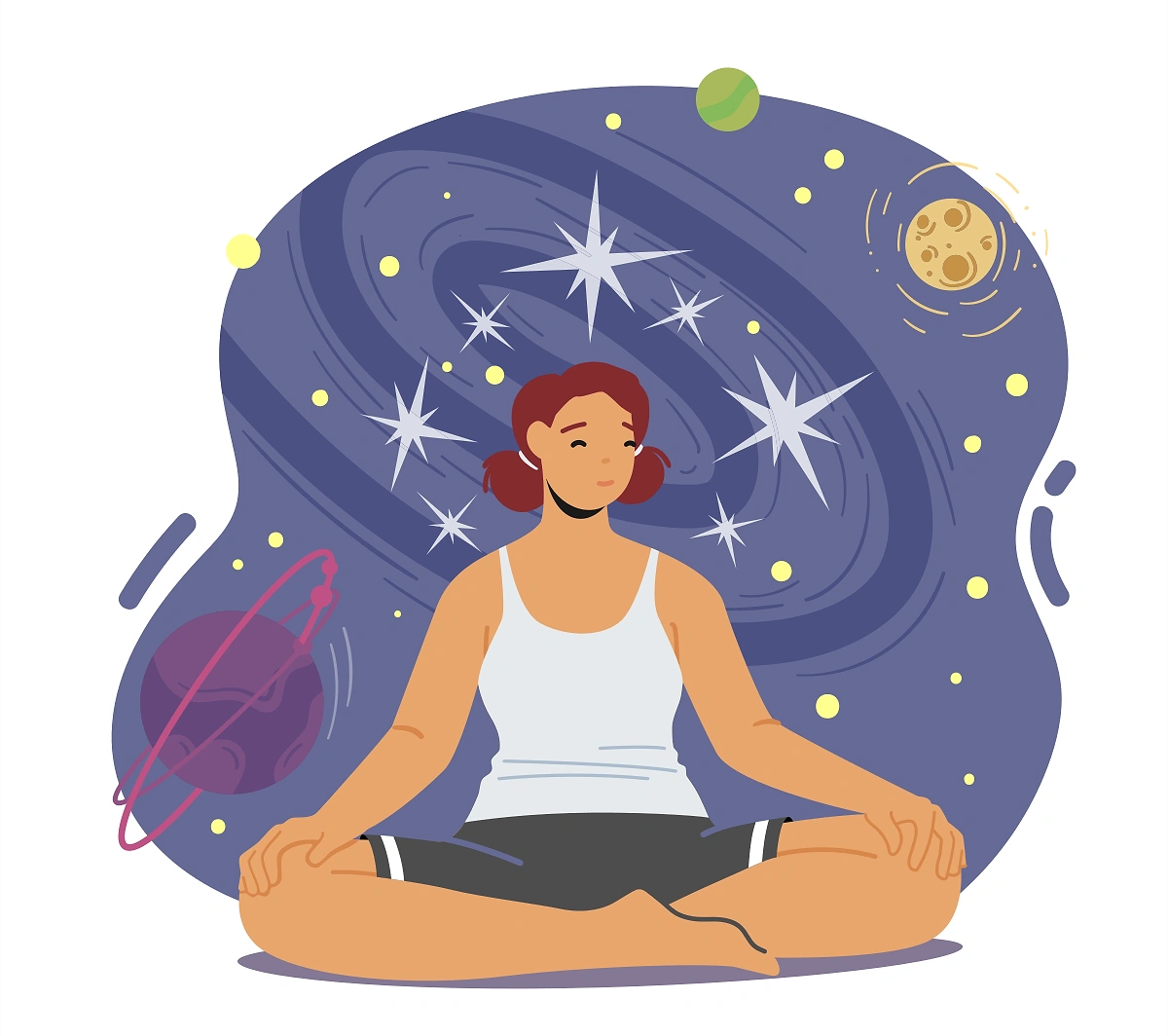
Creativity is not a mystical gift bestowed upon the few—it's a cognitive state that can be deliberately cultivated. Neuroscience research has revealed that creative insights arise from specific brainwave patterns and neural network configurations that controlled breathing can reliably induce (Dietrich & Kanso, 2010). From artists and writers to entrepreneurs and scientists, innovative thinkers across fields have intuitively used breath practices to access flow states and breakthrough thinking. This article explores the neuroscience of creativity and provides practical breathing techniques to unlock your innovative potential.
The Neuroscience of Creativity
Creative thinking involves the dynamic interplay between two neural networks: the executive control network (focused attention) and the default mode network (mind-wandering and association). Breakthrough insights often occur when the default mode network is allowed to operate without excessive executive control—a state characterized by alpha brainwaves (8-12 Hz) and associated with relaxed alertness (Beaty et al., 2016).
The Role of Alpha Waves
Alpha brainwaves emerge during states of wakeful relaxation and are strongly associated with creative ideation. Fink and colleagues (2009) found that individuals with higher alpha wave activity during creative tasks produced more original ideas. Importantly, this state can be deliberately induced through specific breathing patterns that promote parasympathetic activation without causing drowsiness.
Breath and the Creative State
Controlled breathing influences creativity through multiple mechanisms. By reducing cortisol and lowering prefrontal hyperactivity, breath practices allow the associative networks to function more freely. Simultaneously, maintaining alertness through proper oxygenation prevents the drift into sleepiness that would end productive ideation (Colzato et al., 2012).
Breathe Before Brainstorms
Walking Breath
Breath Journaling
Try This Exercise
4-6 Creative
Creative Breath3 min
Let's unlock your creativity together!
4s In
6s Out
The Creative Breathing Protocol
This technique combines slow breathing with a slightly extended exhale to promote alpha wave production while maintaining the alertness necessary for capturing and developing ideas.
The 4-6 Creative Breath
Inhale smoothly through your nose for 4 counts, then exhale slowly for 6 counts. This ratio gently activates the parasympathetic system while keeping you alert. Practice for 3-5 minutes before creative work, or whenever you feel creatively blocked. The extended exhale is key—it shifts the nervous system toward the relaxed-yet-alert state where creativity flourishes.
Walking Breath for Incubation
Many creative breakthroughs occur during incubation periods—times when we step away from direct problem-solving. Combine walking with rhythmic breathing (4 steps inhale, 6 steps exhale) to accelerate incubation. The mild physical activity, combined with breath rhythm, promotes alpha waves while the change of environment stimulates novel associations (Oppezzo & Schwartz, 2014).
Applying Breath to Creative Practice
Integrate breathing at key points in your creative process: before brainstorming to open the mind, during idea generation when you feel blocked, and after intensive work to allow integration. Many creators find that morning breathwork, before checking devices, produces the most generative creative states.
Breaking Through Creative Blocks
When you hit a creative wall, your nervous system has likely shifted into a stressed, narrow-focus state that inhibits associative thinking. The solution is not to push harder but to reset your neurological state. Try this creative unblock protocol: Step away from your work, find a quiet space, and perform 3 minutes of 4-6 breathing. Then spend 2 minutes in open awareness—simply noticing sounds, sensations, and thoughts without engaging them. Often, the blocked insight will arise spontaneously as your mind relaxes into its natural creative mode.
Building a Creative Practice Ritual
Many accomplished creators have established breathing rituals that signal to their brain it's time for creative work. Author Neil Gaiman famously sits in the same chair with nothing to do but write or breathe. Consider creating your own ritual: three minutes of rhythmic breathing in your creative space before each work session. Over time, this cue becomes a powerful trigger that shifts your brain into creative mode automatically, bypassing the resistance and procrastination that plague so many creative endeavors.
Conclusion
Creativity is not about waiting for inspiration—it's about creating the conditions in which inspiration can arise. Through deliberate breathing practices, we can shift our brain state from the anxious, focused mode that blocks creativity to the relaxed, open mode where novel connections emerge. The 4-6 breath pattern offers a simple, reliable entry point to this creative state, available whenever you need fresh thinking.
Related Articles
Deep Focus at Work
Morning Energy Ritual
Mindful Moments Throughout the Day
References
Beaty, R. E., Benedek, M., Silvia, P. J., & Schacter, D. L. (2016). Creative cognition and brain network dynamics. Trends in Cognitive Sciences, 20(2), 87-95.
Colzato, L. S., Ozturk, A., & Hommel, B. (2012). Meditate to create: The impact of focused-attention and open-monitoring training on convergent and divergent thinking. Frontiers in Psychology, 3, 116.
Dietrich, A., & Kanso, R. (2010). A review of EEG, ERP, and neuroimaging studies of creativity and insight. Psychological Bulletin, 136(5), 822-848.