Starting a meditation practice doesn't require hours of silence or years of training—research shows that even brief daily sessions produce measurable changes in brain structure and function within eight weeks (Hölzel et al., 2011). The breath serves as the ideal entry point because it's always available, requires no equipment, and provides a tangible anchor for attention. Meta-analyses of meditation research demonstrate that beginners who focus on breath awareness show faster skill acquisition and greater long-term adherence than those who start with more complex techniques (Goyal et al., 2014). Whether you have five minutes or fifty, breath-focused meditation offers an accessible path to the profound benefits of contemplative practice.
Why Breath is the Perfect Starting Point
Among the many objects of meditation—mantras, visualizations, body sensations, sounds—the breath holds a unique position as the most accessible and forgiving focus for beginners. Unlike a mantra that must be remembered or a visualization that must be constructed, your breath is simply there, happening automatically, requiring only that you notice it. This simplicity is precisely what makes it powerful. Research from the University of Wisconsin's Center for Healthy Minds shows that breath-focused meditation activates the brain's attention networks more effectively than other beginner techniques, creating the neural infrastructure for deeper practices later (Davidson & Lutz, 2008). The breath also provides constant feedback—each inhale and exhale offers a fresh opportunity to practice attention, making the practice self-renewing rather than repetitive.
The Neuroscience of Breath Attention
When you focus on your breath, you're engaging a specific neural network called the salience network, which helps determine what deserves your attention. Studies using fMRI imaging reveal that this network becomes more efficient with practice, making it easier to maintain focus not just during meditation but throughout your day (Tang et al., 2015). Additionally, breath awareness activates the insula, a brain region that processes internal body sensations and is linked to emotional intelligence and self-awareness. This explains why even brief breath meditation often leaves practitioners feeling more grounded and emotionally regulated—you're literally strengthening the brain circuits responsible for these capacities.
The Wandering Mind: Your Greatest Teacher
The moment you notice your mind has wandered from the breath, you might feel frustrated or consider yourself a "bad meditator." This is the most common misunderstanding about meditation. The wandering mind is not the enemy of meditation—it's the training ground. Each time you notice distraction and return to the breath, you're performing a mental repetition, similar to a bicep curl for the brain's attention muscles. Research shows that this moment of noticing—called "metacognitive awareness"—is actually where the real training happens (Schooler et al., 2011). Experienced meditators don't have minds that never wander; they simply notice the wandering more quickly and return more gently. A meditation session where your mind wanders a hundred times and you return a hundred times is not a failed session—it's a hundred successful practice repetitions.
Types of Mind Wandering
Not all mind wandering is equal. Researchers distinguish between "tuning out" (where you lose awareness that you've wandered) and "zoning out" (where you deliberately disengage). Beginning meditators often experience extended periods of tuning out before noticing, while experienced practitioners catch the wandering earlier. There's also planning mind (thinking about future tasks), reviewing mind (replaying past events), and fantasy mind (creating scenarios that haven't happened). Recognizing these patterns without judgment helps you understand your mental habits. Some practitioners find it helpful to briefly label the type of wandering—"planning," "remembering," "imagining"—before gently returning to the breath. This labeling can accelerate the development of metacognitive awareness.
Try This Exercise
4-4 Simple
Beginner's Breath2 min
Welcome! Let's begin your meditation journey.
4s In
4s Out
Your First Meditation: A Step-by-Step Guide
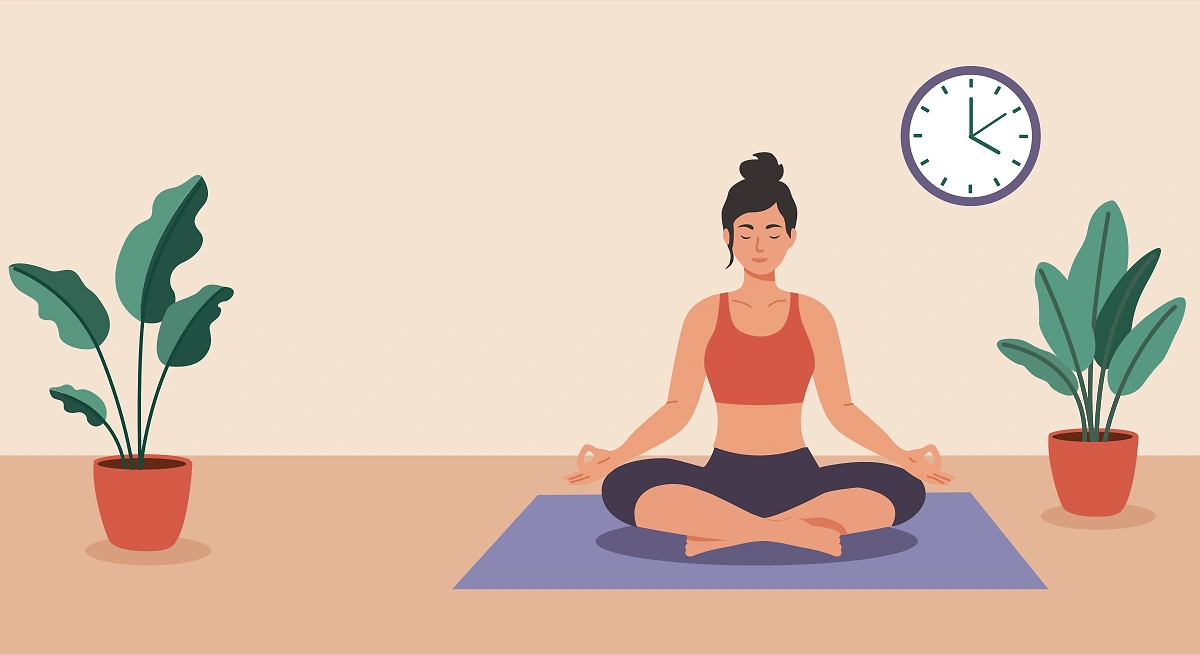
Begin by finding a position where you're comfortable but alert—sitting on a chair, cushion, or even lying down if sitting is difficult. Close your eyes or soften your gaze toward the floor. Take three deep breaths to signal to your body that you're shifting into a different mode. Then let your breathing return to its natural rhythm without trying to control it. Choose one anchor point to focus on: the sensation of air at your nostrils, the rise and fall of your chest, or the expansion of your belly. Stay with this sensation. When you notice your mind has wandered—and it will—simply note "thinking" and return to your anchor point. That's the entire practice. Start with five minutes. Many beginners are surprised to find that five minutes of real attention is longer than it sounds.
Common Beginner Mistakes
The most common mistake is trying to stop thinking. Meditation is not the absence of thought but the awareness of thought. When you try to suppress thoughts, you create tension that makes meditation harder. Instead, let thoughts arise and pass like clouds in the sky while your attention rests on the breath. Another mistake is changing your breathing to make it "better." Your breath is fine as it is. The practice is to observe, not to optimize. Finally, many beginners quit because they don't feel "peaceful" or "enlightened" immediately. Early meditation sessions often feel boring, frustrating, or even uncomfortable as you become aware of the usual chaos of your mind. This discomfort is part of the process, not a sign of failure.
Building a Sustainable Practice
The meditation research is clear: consistency matters more than duration. A daily five-minute practice produces better outcomes than occasional hour-long sessions (Creswell et al., 2014). The key is building meditation into your existing routine through "habit stacking"—linking your practice to something you already do consistently. Meditate right after your morning coffee, immediately after sitting down at your desk, or just before getting into bed. Remove friction by having a designated spot where you practice. Keep your cushion or chair visible as a reminder. Track your practice—even a simple check mark on a calendar creates accountability and momentum.
Start with just 5 minutes daily—research shows brief consistent practice outperforms sporadic longer sessions
Find a position where you're comfortable but alert—slouching leads to drowsiness, tension leads to restlessness
Use a gentle timer so you're not checking the clock—many meditation apps offer pleasant ending bells
Practice at the same time daily—habit formation depends on consistency more than willpower
Treat yourself with kindness when your mind wanders—harsh self-judgment undermines the practice
What to Expect in Your First Weeks
Week one often feels awkward. You're learning a new skill, and like learning anything new, it's uncomfortable at first. Your mind may race, your body may fidget, and you'll wonder if you're "doing it right." You are. Week two usually brings more familiarity with the process, though frustration may increase as you become more aware of how busy your mind actually is. This is progress—you're developing the metacognitive awareness that was always lacking. By week three or four, most practitioners report moments of genuine calm, even if brief. Research shows that the emotional and cognitive benefits of meditation become measurable after about two weeks of daily practice, even with short sessions (Chiesa & Serretti, 2009). The structural brain changes documented in long-term meditators begin forming after about eight weeks of consistent practice.
Deepening Your Practice Over Time
As you establish a consistent meditation routine, your practice naturally evolves and deepens. The initial struggle with restlessness and constant mental chatter gradually gives way to longer periods of sustained attention and more frequent moments of genuine calm. Many practitioners notice that after several weeks, they begin to look forward to their practice rather than viewing it as another task to complete. This shift marks an important transition from effortful discipline to intrinsic motivation, where meditation becomes less about what you should do and more about what nourishes you. Trust this process of gradual unfolding, knowing that each session builds upon the last in ways that may not be immediately apparent.
Recognizing Progress Without Attachment
Progress in meditation often looks different from progress in other pursuits. You may not feel dramatically more peaceful after a week or even a month, yet subtle changes are occurring beneath the surface. Perhaps you notice that you catch yourself ruminating sooner than before, or that you recover more quickly from frustrating situations. Maybe you find brief moments of spontaneous presence during your day, a simple awareness of being alive that you previously overlooked. These quiet indicators of growth matter more than any dramatic experience during formal practice. The key is to notice these changes with gentle appreciation rather than grasping at them, allowing your practice to mature organically without forcing specific outcomes.
Conclusion
Beginning meditation is simpler than you think and harder than you expect—and that paradox is part of its value. The simplicity of breath awareness means you can start immediately, without preparation or equipment. The difficulty of maintaining attention reveals the untrained nature of your mind and provides the opportunity to develop mental skills that transfer to every area of life. Every expert meditator was once a frustrated beginner wondering if they were doing it right. The answer is almost always yes—if you're sitting, breathing, and returning your attention when it wanders, you're meditating. Everything else is refinement that comes with time.
Related Articles
Mindful Breathing Basics
Morning Mindfulness Practice
Finding Stillness Within
References
Chiesa, A., & Serretti, A. (2009). Mindfulness-based stress reduction for stress management in healthy people: a review and meta-analysis. Journal of Alternative and Complementary Medicine, 15(5), 593-600.
Creswell, J. D., et al. (2014). Brief mindfulness meditation training alters psychological and neuroendocrine responses to social evaluative stress. Psychoneuroendocrinology, 44, 1-12.
Davidson, R. J., & Lutz, A. (2008). Buddha's brain: Neuroplasticity and meditation. IEEE Signal Processing Magazine, 25(1), 176-174.