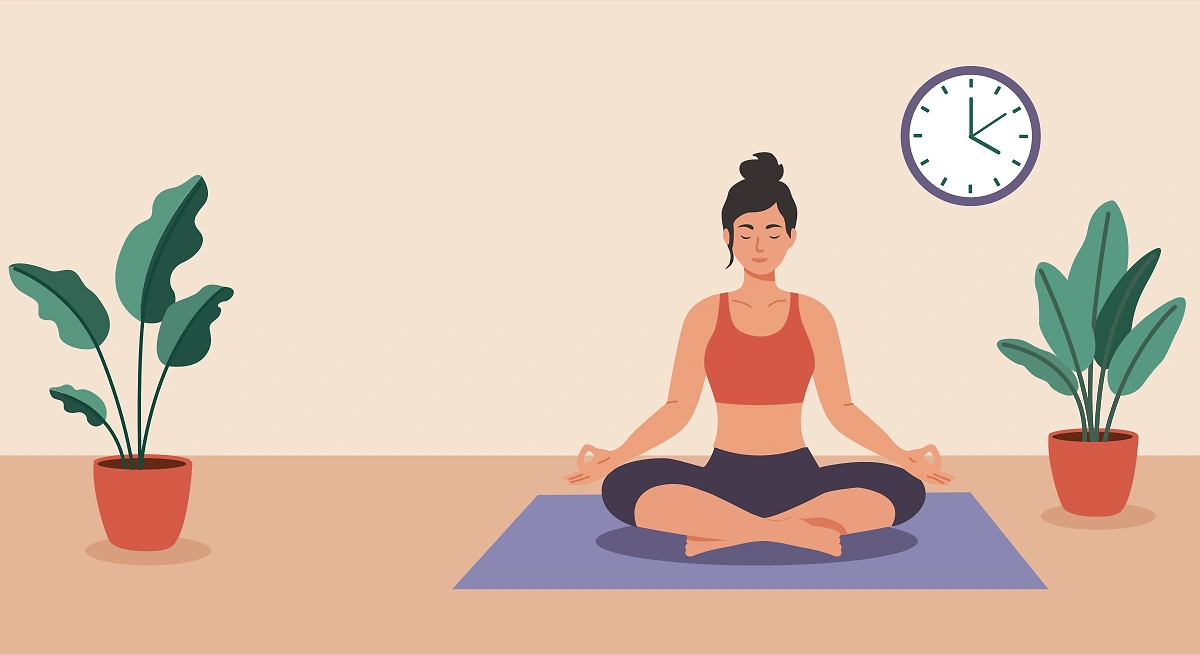
The first conscious moments of your day possess extraordinary power to shape what follows—research on "temporal landmarks" shows that how we begin periods of time strongly influences our mindset and behavior throughout them (Dai et al., 2014). A brief morning mindfulness practice creates a buffer between sleep and the demands of the day, allowing you to transition intentionally rather than reactively. Studies demonstrate that morning meditation produces greater adherence rates than evening practice and stronger effects on emotional regulation throughout the day (Willoughby et al., 2022). Even five minutes of breath awareness before engaging with phones, emails, or to-do lists can establish a quality of presence that persists for hours. The morning offers a unique opportunity: your mind is relatively fresh, your schedule temporarily clear, and the day's momentum hasn't yet begun.
Before the Phone
The moment you reach for your phone, your attention fragments. Notifications, messages, news alerts—each one pulls you into reactive mode before you've even fully awakened. Research on smartphone use shows that checking your phone within the first hour of waking is associated with higher stress levels and reduced focus throughout the day (Duke & Montag, 2017). This isn't about technology being "bad"—it's about sequence. Your phone will still be there after ten mindful breaths. Those ten breaths, however, are yours alone. They represent a choice: to begin the day on your terms, with your attention under your direction, rather than allowing external demands to immediately capture your focus. This small act of sovereignty compounds over days and weeks into a different relationship with your mornings entirely.
The Attention Economy Begins at Dawn
We live in an attention economy where companies compete for every moment of your awareness. Your morning attention is particularly valuable—it's fresh, it's high quality, and it sets patterns for the day. By claiming even a few minutes of this attention for yourself before offering it to others, you're making a statement about your priorities. You're declaring that your inner life matters before your inbox. This isn't selfish; it's sustainable. The quality of attention you bring to your morning meditation is often the best attention you'll have all day. Using it to establish presence creates a foundation that improves everything that follows—your interactions, your work, your decisions.
The Transition Zone
The period between waking and rising represents a unique neurological state. Sleep researchers call this "sleep inertia"—a transitional period where the brain shifts from sleep-dominant to wake-dominant neural activity (Tassi & Muzet, 2000). During this window, your brain is naturally in a more receptive, less analytical state. This makes it ideal for contemplative practice. Rather than immediately engaging the planning, problem-solving prefrontal cortex, morning meditation allows you to extend and utilize this naturally contemplative state. Many practitioners find that insights arise more easily in this liminal space—the mind is quiet enough to hear its own wisdom.
Practice While Still in Bed
You don't need to get up to begin your practice. Many meditation teachers recommend starting before you rise, while still lying in bed. The moment you become aware you're awake, before opening your eyes or moving, take ten conscious breaths. Feel your body's weight on the mattress. Notice the temperature of the room. Sense the transition from sleep to wakefulness. This "bed meditation" removes barriers—there's no getting up, no finding a cushion, no concerns about posture. It's simply awareness meeting the moment. For those who struggle to establish a meditation habit, this can be the entry point that makes consistent practice possible.
Try This Exercise
4-4-1 Morning
Morning Mindfulness2 min
Good morning! Let's set your intention for today.
4s In
4s Out
Setting Intention
After your breathing practice, there's an opportunity to set an intention for the day. This isn't a goal or a to-do item—it's a quality of being you want to embody. Ask yourself: What quality do I want to bring to this day? Patience? Curiosity? Kindness? Courage? Let one word arise naturally without forcing it. Research on implementation intentions shows that this simple practice significantly increases the likelihood of acting in alignment with your values throughout the day (Gollwitzer & Sheeran, 2006). The intention acts as a subtle guide, a reminder you can return to when things get challenging. If "patience" was your morning intention, you have a touchstone when frustration arises.
The Power of a Single Word
Why one word? Because complexity doesn't serve intentions well. A lengthy affirmation or detailed visualization is hard to remember and harder to apply in the moment. A single word is portable—it can travel with you anywhere, resurface at any time, serve as an instant reminder. "Present." "Ease." "Connect." "Breathe." Some practitioners write their word on their hand, set it as their phone wallpaper, or place a sticky note on their mirror. The word becomes a thread connecting your morning intention to your daily actions. When you notice tension, you remember: "Ease." When you're rushing, you remember: "Present." The word is a doorway back to the quality you chose.
Building the Habit
The challenge with morning practice isn't the practice itself—it's remembering to do it. Habit formation research identifies three key elements: cue, routine, and reward (Clear, 2018). For morning meditation, the cue is waking up. The routine is your practice. The reward is the felt sense of presence you carry into your day. The most effective strategy for building this habit is "habit stacking"—linking your new practice to something you already do consistently. If you always sit on the edge of your bed before standing, that becomes your cue: feet touch floor, you take ten breaths. If you always use the bathroom immediately upon waking, your cue is sitting down. The existing habit carries the new one.
Practice before rising—begin your meditation while still lying in bed for maximum consistency
Keep the phone away until after your practice—your morning attention is too valuable to give away immediately
Start with ten breaths minimum—small enough to always be possible, significant enough to matter
Set a one-word intention—carry a quality like "present" or "ease" as your compass for the day
Stack the habit—link your practice to something you already do consistently each morning
A Complete Morning Practice
Here's a ten-minute morning practice that combines breath awareness and intention setting. Upon waking, before moving, take ten conscious breaths where you are. Feel the breath without trying to change it. After ten breaths, slowly sit up on the edge of your bed. Place your feet on the floor and sit with your spine upright. Close your eyes and take twenty more breaths, noticing the natural rhythm of your breathing. Don't manipulate—just witness. After these twenty breaths, ask silently: "What quality do I want to bring to this day?" Wait for a word to arise. When it does, breathe with it for five more breaths, feeling the quality as if you already embody it. Open your eyes. Begin your day with that word as your companion.
Adapting When Time Is Short
Not every morning allows for ten minutes. On rushed mornings, the practice adapts. Three conscious breaths while still lying in bed. One intention word as your feet touch the floor. A moment of presence while the coffee brews. The essence of morning practice isn't duration—it's the shift from autopilot to awareness. Even thirty seconds of genuine presence before engaging with the day's demands can change your relationship with those demands. The practice teaches you that mindfulness doesn't require perfect conditions. It can be woven into whatever morning you're given.
Common Obstacles and Solutions
The most common obstacle is simply forgetting. You wake up, immediately think of something you need to do, and your feet carry you to the bathroom before you've remembered to practice. The solution is environmental design: put a note by your bed, change your alarm tone to something that reminds you, or ask a partner to practice with you. Another obstacle is drowsiness—falling back asleep during bed meditation. If this happens, open your eyes, sit up, or add slight physical engagement like pressing your palms together. A third obstacle is the "I don't have time" voice. Remember: you don't have time NOT to practice. The minutes invested in morning presence save hours of reactive stress.
The Ripple Effect of Morning Practice
What begins as a personal practice in the quiet of early morning extends far beyond those initial moments. The quality of presence you cultivate ripples outward into your interactions with others throughout the day. Family members, coworkers, and even strangers benefit from engaging with someone who has taken time to center themselves. Research on emotional contagion shows that our states influence those around us, and a grounded, present person can shift the tone of entire conversations and meetings. Your morning practice is thus not merely self-care but a gift to everyone you encounter. The few minutes invested in your own presence become hours of improved connection with others.
Creating a Morning Sanctuary
Consider designating a specific spot for your morning practice, even if it is simply the edge of your bed or a particular chair. This physical consistency creates a psychological anchor that deepens over time. The location begins to carry associations of peace and presence, making it easier to drop into a contemplative state each morning. Some practitioners enhance their morning sanctuary with subtle sensory cues: a particular blanket, a small plant, or a window with a view of the sky. These elements are not necessary but can support the transition from sleep to practice. The goal is creating an environment that invites rather than demands mindfulness, making your morning practice feel like coming home rather than completing a task.
Conclusion
How you begin matters. The first moments of consciousness set a trajectory that influences everything that follows. A morning mindfulness practice—however brief—is a statement of values: that your inner life deserves attention before your outer obligations, that presence is worth cultivating before productivity, that you are more than your to-do list. Over time, practitioners find that morning practice changes their relationship with mornings themselves. What was once a rushed, reactive launch into the day becomes a conscious transition, a sacred pause, a moment of reclaiming sovereignty over your own attention. The day will make its demands soon enough. These moments are yours.
Related Articles
Meditation for Beginners
Morning Energy Ritual
References
Clear, J. (2018). Atomic Habits: An Easy & Proven Way to Build Good Habits & Break Bad Ones. Avery.
Dai, H., Milkman, K. L., & Riis, J. (2014). The fresh start effect: Temporal landmarks motivate aspirational behavior. Management Science, 60(10), 2563-2582.
Duke, É., & Montag, C. (2017). Smartphone addiction, daily interruptions and self-reported productivity. Addictive Behaviors Reports, 6, 90-95.