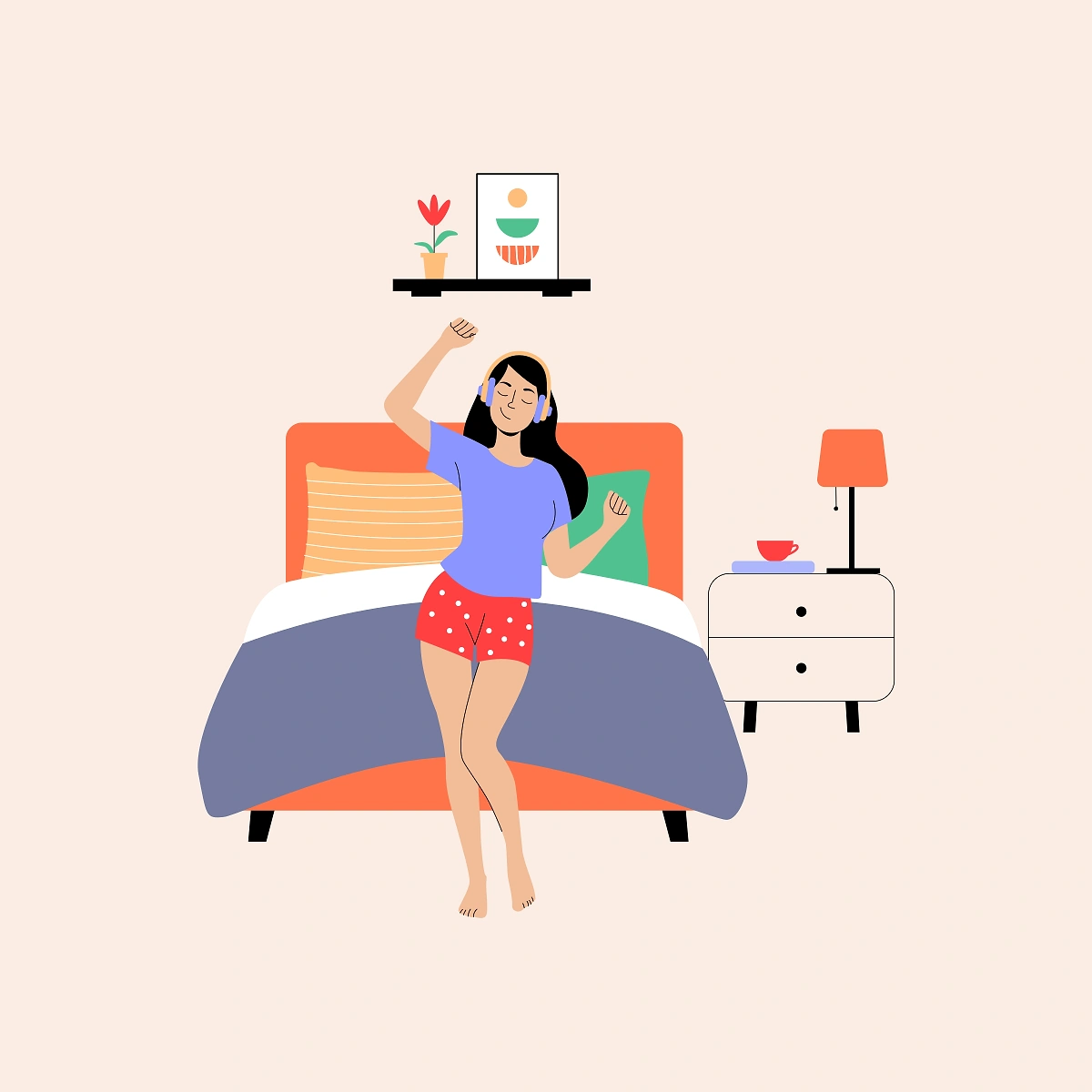
Sleep leaves the body stiff—muscles contract, fascia tightens, joints lose lubrication. Research shows that morning movement combined with conscious breathing not only addresses physical stiffness but also improves mood, energy, and cognitive performance for hours afterward (Scully et al., 1998). This ten-minute routine combines gentle stretches with synchronized breath to awaken your body systematically from head to toe.
Why Bodies Are Stiff in the Morning
During sleep, you move significantly less than when awake, and your body temperature drops. Both factors contribute to morning stiffness. Synovial fluid—the lubricant in your joints—becomes more viscous when still, requiring movement to become fluid again. Muscles held in shortened positions during sleep need lengthening. This is why those first steps out of bed feel creaky. The good news: even gentle movement quickly reverses these effects.
The Breath-Movement Connection
Breathing and movement are intimately linked through the diaphragm, which attaches to the spine and influences core stability. When you coordinate breath with movement—inhaling during extension, exhaling during flexion—you create a synergy that neither breath nor movement alone provides (Anderson et al., 2018). The combination amplifies benefits: greater range of motion, deeper stretch, more complete breathing.
The Morning Routine
This routine takes ten minutes and requires no equipment. You can do it in pajamas, in your bedroom, before coffee or shower. Each movement is coordinated with breath, making this both a physical and breathing practice.
Lying Awakening (2 minutes)
Stay in bed. Stretch your arms overhead, point your toes, and lengthen your entire body on an inhale. Exhale and release. Repeat three times. Then hug your knees to your chest and rock gently side to side, massaging your lower back. Take five breaths here. Finally, let your knees fall to the right while looking left (a gentle spinal twist), hold for three breaths, then switch sides.
Seated Awakening (2 minutes)
Sit on the edge of your bed or in a chair. Let your head drop toward your chest on an exhale, then slowly roll it in a half-circle to look up and slightly back on an inhale. Repeat three times each direction. Then interlace your fingers, turn your palms away from you, and push your arms forward, rounding your upper back (cat position) on an exhale. Inhale and open your arms wide, squeezing shoulder blades together (cow position). Flow between these five times.
Standing Flow (4 minutes)
Stand with feet hip-width apart. Inhale arms overhead, palms together, and look up slightly. Exhale, swan-dive forward with a flat back, letting hands come to shins, toes, or floor (wherever comfortable). Inhale to a flat back halfway up. Exhale fold completely, letting head hang. Inhale roll up slowly, stacking vertebra by vertebra, arms coming overhead. Exhale arms down. Repeat this flow 5-6 times, moving slowly with breath.
Grounding Finish (2 minutes)
Stand tall, feet parallel, arms at sides. Close your eyes. Take ten slow breaths, feeling your feet on the ground, the crown of your head lifting toward the ceiling. Notice your body's new state compared to waking: more fluid, more awake, more present. On your final exhale, open your eyes and set a simple intention for the day ahead.
Related Articles

The Power of Morning Breath Work
Setting Your Daily Intention Through Breath
References
Anderson, B. E., Bliven, K. C. H., & Mahar, M. T. (2018). The effects of breathing exercises combined with stretching on flexibility. International Journal of Sports Physical Therapy, 13(2), 229-236.
Gardner, B., Lally, P., & Wardle, J. (2012). Making health habitual: The psychology of habit-formation and general practice. British Journal of General Practice, 62(605), 664-666.
Scully, D., Kremer, J., Meade, M. M., Graham, R., & Dudgeon, K. (1998). Physical exercise and psychological well being: A critical review. British Journal of Sports Medicine, 32(2), 111-120.
Was this article helpful?