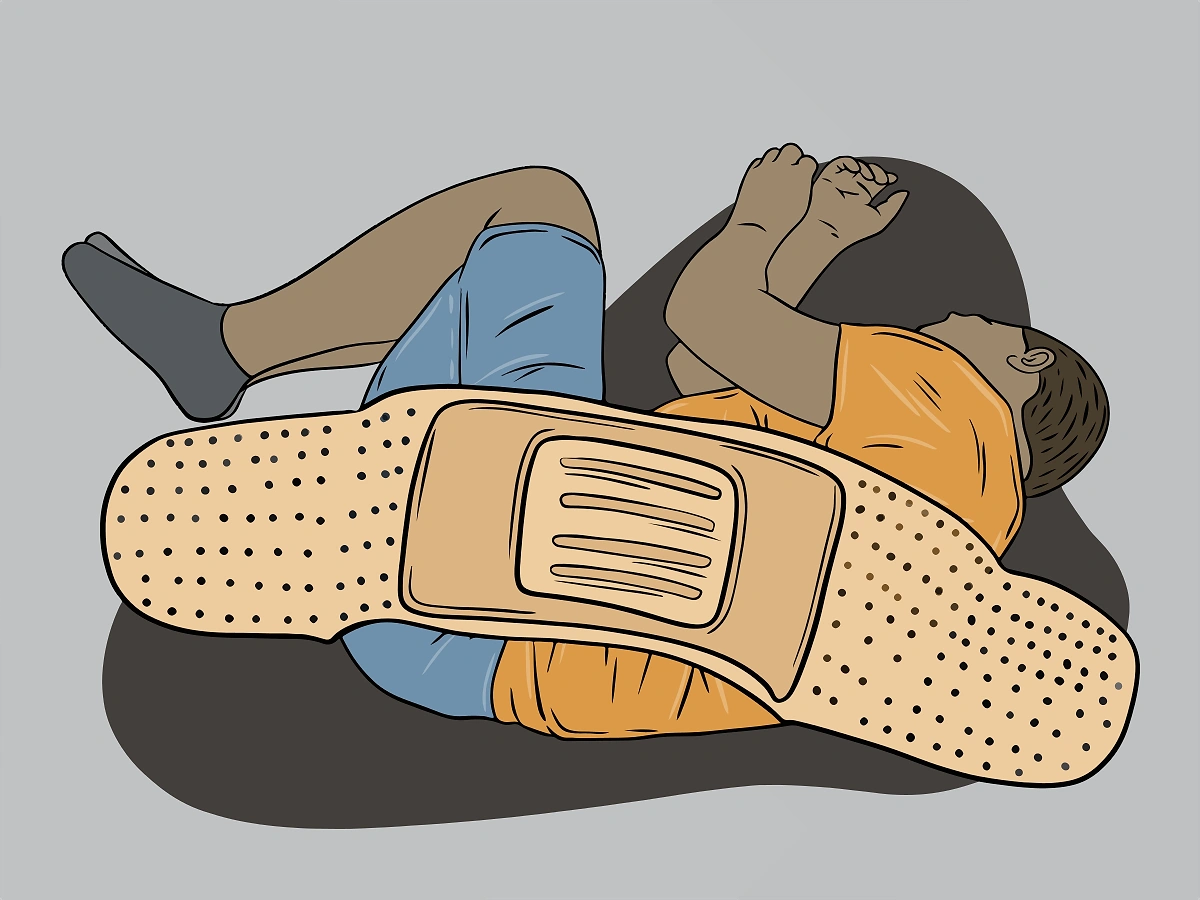
Rest days are not passive waiting periods—they're active recovery opportunities that determine how much benefit you receive from your training. Research in exercise physiology shows that structured rest day practices can improve recovery rates by 20-40% compared to complete rest (Kellmann & Beckmann, 2018). This 20-minute breathing ritual transforms rest days from empty calendar slots into powerful recovery sessions that prepare your body and mind for the training ahead.
The Case for Active Rest
Traditional thinking suggested that rest days meant doing nothing. Modern sports science tells a different story: complete inactivity can actually slow recovery compared to light, restorative activity. The key is choosing activities that enhance recovery without adding training stress—and breathing practices are the perfect example (Hausswirth & Mujika, 2013).
What Happens on Rest Days
During rest, your body repairs microdamage to muscles, replenishes glycogen stores, restores hormone balance, and adapts to training stress. These processes require parasympathetic nervous system dominance—the "rest and digest" state. Many people remain in sympathetic dominance even on rest days, due to work stress, poor sleep, or residual training stress. A dedicated breathing ritual helps shift into the parasympathetic state where recovery actually happens.
The 20-Minute Rest Day Protocol
This ritual is designed specifically for rest days when your body is recovering from training. It combines three phases that progressively deepen relaxation and maximize recovery processes.
Preparation
Timing: Schedule this ritual at a consistent time—morning to set up the day for recovery, or afternoon as a dedicated recovery session. The consistency helps your body anticipate and prepare for deep rest.
Environment: Choose a quiet, comfortable space. Dim lighting helps signal relaxation. Room temperature should be comfortable—slightly warm promotes muscle relaxation. Have a yoga mat or comfortable surface to lie on.
Attire: Wear loose, comfortable clothing. Remove watches, jewelry, or anything that constrains.
Try This Exercise
5-2-7 Recovery
Rest Day Recovery3 min
Let's maximize your recovery together.
5s In
7s Out
Phase 1: Settling (5 minutes)
The settling phase transitions your nervous system from whatever state it was in toward recovery mode. Don't rush this—the foundation matters.
Instructions
Position: Lie on your back with knees bent, feet flat on the floor, hip-width apart. Place a folded blanket or small pillow under your head. Let arms rest at your sides, palms up.
Initial scan: Close your eyes. Take one minute to simply notice your body. Where do you feel tension? Soreness? Fatigue? Don't try to change anything yet—just observe.
Settling breath: Begin breathing naturally through your nose. Don't control the breath yet. Simply observe the rhythm that's already happening. Let your body sink into the floor with each exhale. Continue for 4 minutes, allowing the breath to naturally deepen and slow.
Phase 2: Deep Diaphragmatic Work (10 minutes)
This central phase actively stimulates the parasympathetic nervous system, maximizes oxygen delivery to recovering tissues, and creates the physiological conditions for accelerated recovery.
The Technique
Hand placement: Place your right hand on your chest, left hand on your belly below the navel. These hands provide feedback—your goal is to feel the belly hand rise significantly while the chest hand stays relatively still.
The breath pattern: Inhale slowly through your nose for 5 counts, directing the breath into your lower belly. Feel your belly expand, pushing your hand up. The expansion should come from the diaphragm descending, not from puffing up the chest.
The hold: At the top of the inhale, hold for 2-3 counts. This brief pause allows oxygen exchange to complete.
The exhale: Exhale slowly through your nose for 7-8 counts. Feel your belly naturally fall as the diaphragm releases. Don't push—let gravity and the diaphragm's elastic recoil do the work.
Rhythm: Continue this pattern for the full 10 minutes. Each breath cycle takes about 15-18 seconds, yielding roughly 3-4 breaths per minute—the optimal rate for parasympathetic activation.
Mental Focus
During this phase, let your attention rest on the physical sensations of breathing—the expansion of the belly, the flow of air through nostrils, the release of the exhale. When thoughts arise (planning, worrying, analyzing), simply notice them and return attention to the breath sensations. This isn't failure—it's the practice.
Phase 3: Integration (5 minutes)
The final phase allows the benefits of deep breathing to integrate while gradually transitioning back toward normal alertness.
Instructions
Release the count: Stop counting and let the breath become completely natural. Don't control it—just observe whatever rhythm emerges. It will likely be slower and deeper than your usual breath.
Body scan: Slowly move your attention through your body from feet to head. Notice how you feel now compared to when you began. Where has tension released? How does the quality of relaxation compare?
Gratitude moment: Take a few breaths to appreciate your body's ability to recover and adapt. This isn't fluffy sentiment—gratitude practices have measurable effects on stress hormones and well-being (Emmons & McCullough, 2003).
Transition: When ready, begin moving fingers and toes. Roll to one side and rest for a moment before slowly coming to seated. Take 3 deep breaths in this position before standing.
Enhancing the Ritual
Several additions can amplify the benefits of rest day breathing:
Add gentle stretching before or after—breath enhances flexibility work
Schedule it—treating rest day practice as an appointment increases compliance
Use ambient sound or soft music without lyrics if helpful
Warmth promotes relaxation—use a blanket or slightly heated room
Phone in another room—20 minutes of true disconnection is part of recovery
Combining with Stretching
Rest day breathing pairs perfectly with gentle stretching. The breath enhances the stretch by promoting muscle relaxation, while the stretch enhances the breath by opening the chest and shoulders. For a complete 30-minute rest day session, add 10 minutes of gentle yoga or stretching after the breathing ritual.
Breath-Enhanced Stretching
During stretches, inhale to prepare and lengthen the spine. Exhale to move deeper into the stretch. Never force—let the breath do the work. Hold each stretch for 5-8 breath cycles rather than counting seconds. This creates a natural, responsive approach to flexibility work.
Rest Day vs. Active Recovery
This breathing ritual is designed for true rest days—days with no planned training. On active recovery days (light walks, easy swims, mobility work), you can use an abbreviated version: 5 minutes of settling breath followed by 5 minutes of deep diaphragmatic work. Save the full 20-minute ritual for complete rest days when maximizing recovery is the sole goal.
Building Rest Day Rituals Into Your Weekly Routine
The power of a rest day ritual grows when it becomes a consistent part of your weekly schedule. Rather than viewing rest days as empty spaces between training, begin to see them as essential appointments for recovery that deserve the same commitment you give to your workouts. Schedule your breathing ritual at a specific time each rest day, whether that is morning to set the tone for a restorative day, or afternoon as a dedicated recovery block. This consistency creates anticipation and signals to your body and mind that intentional recovery is happening, which can enhance the physiological benefits.
Creating a Rest Day Environment
Enhance your rest day ritual by preparing your environment intentionally. Choose a dedicated space in your home that you associate with relaxation and recovery—this could be a specific corner of your bedroom, a comfortable spot in your living room, or even a peaceful outdoor area. Keep this space clean and uncluttered. Consider having specific items you use only during your rest day ritual: a particular blanket, a specific playlist of ambient music, or a calming scent. These environmental cues train your nervous system to shift into recovery mode more quickly each time you begin the practice.
Conclusion
Rest days are opportunities, not gaps in your training schedule. The 20-minute rest day breathing ritual transforms passive rest into active recovery, accelerating the physiological processes that make you stronger, faster, and more resilient. By combining settling breath, deep diaphragmatic work, and mindful integration, you create optimal conditions for your body to repair and adapt. Schedule this ritual on every rest day, and watch your recovery—and your subsequent training—improve measurably.
Related Articles
Walking Meditation Breath
Breath for Muscle Recovery
References
Emmons, R. A., & McCullough, M. E. (2003). Counting blessings versus burdens: An experimental investigation of gratitude and subjective well-being in daily life. Journal of Personality and Social Psychology, 84(2), 377-389.
Hausswirth, C., & Mujika, I. (2013). Recovery for Performance in Sport. Human Kinetics.
Kellmann, M., & Beckmann, J. (2018). Sport, Recovery, and Performance: Interdisciplinary Insights. Routledge.