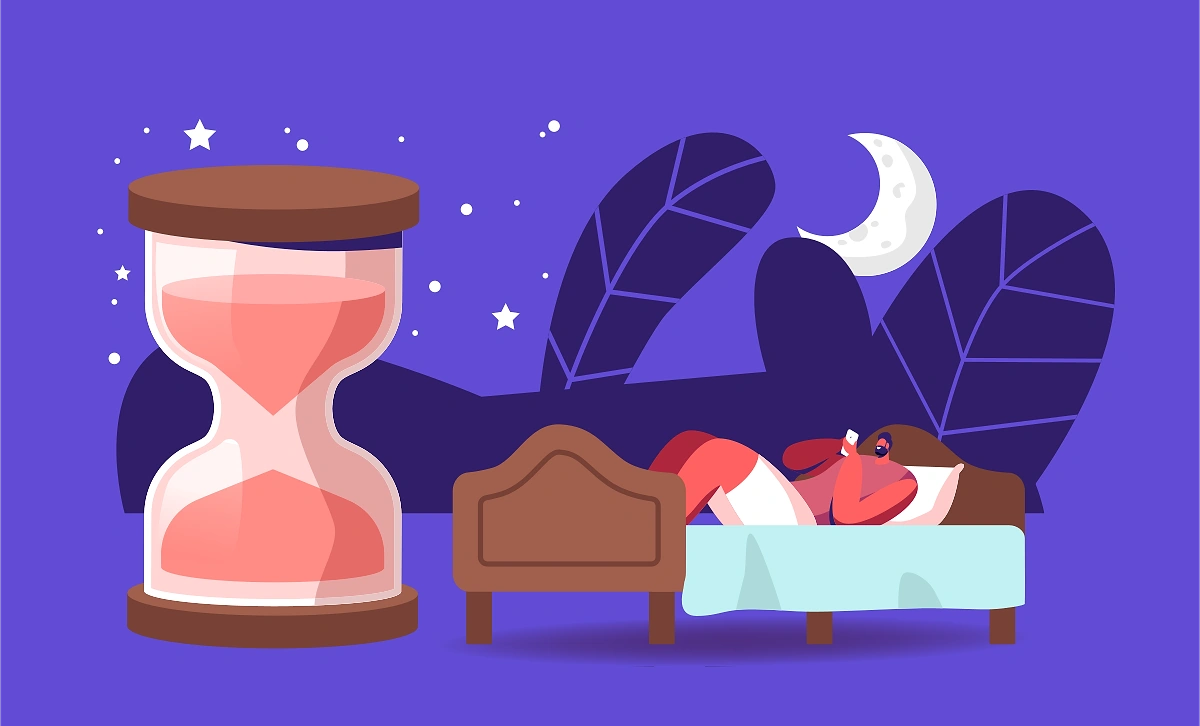
The transition from wakefulness to sleep doesn't happen like flipping a switch—it's a gradual process that requires preparation. Research on sleep hygiene consistently emphasizes the importance of a "buffer zone" between daily activities and bedtime (Irish et al., 2015). This wind-down period allows cortisol levels to decline, body temperature to drop, and the mind to shift from problem-solving mode to rest mode. This article presents a structured evening routine combining breathwork with environmental and behavioral changes for optimal sleep preparation.
The Science of Wind-Down
Sleep is regulated by two systems: the circadian rhythm (your internal clock) and sleep pressure (accumulated need for sleep throughout the day). Both systems can be disrupted by stimulating activities close to bedtime. Blue light from screens suppresses melatonin production, while engaging content keeps the mind activated (Chang et al., 2015). A deliberate wind-down period addresses these disruptions by creating environmental and physiological conditions conducive to sleep.
The 30-Minute Wind-Down Protocol
This protocol divides the final 30 minutes before bed into structured phases, each designed to progressively shift your nervous system toward rest.
Minutes 30-20: Environmental Transition
Begin by dimming lights throughout your space—use lamps instead of overhead lighting, or switch to warm-toned bulbs. Turn off or silence all devices. Set your thermostat to 65-68°F (18-20°C)—a cool room facilitates the body temperature drop that accompanies sleep onset. These environmental changes signal to your brain that the day is ending.
Minutes 20-10: Light Preparation
Complete any necessary bedtime tasks: brushing teeth, washing face, changing into sleep clothes. Move slowly and deliberately. Avoid any task that requires mental effort or decision-making. If thoughts about tomorrow arise, jot them on a notepad to address in the morning—this "worry dump" prevents rumination in bed.
Minutes 10-0: Breathing Practice
Settle into bed and begin progressive relaxation breathing. Inhale slowly for 4 counts, exhale for 6-8 counts. With each exhale, consciously release tension from one body part, starting from your feet and moving upward: feet, calves, thighs, hips, abdomen, chest, hands, arms, shoulders, neck, jaw, and face. By the time you reach your face, you should feel significantly more relaxed.
Related Articles
Sleep Better Tonight
The Art of Letting Go
Breathe Through Your Body
References
Chang, A. M., Aeschbach, D., Duffy, J. F., & Czeisler, C. A. (2015). Evening use of light-emitting eReaders negatively affects sleep, circadian timing, and next-morning alertness. Proceedings of the National Academy of Sciences, 112(4), 1232-1237.
Irish, L. A., Kline, C. E., Gunn, H. E., Buysse, D. J., & Hall, M. H. (2015). The role of sleep hygiene in promoting public health: A review of empirical evidence. Sleep Medicine Reviews, 22, 23-36.
Monk, T. H., Reynolds, C. F., Buysse, D. J., DeGrazia, J. M., & Kupfer, D. J. (2003). The relationship between lifestyle regularity and subjective sleep quality. Chronobiology International, 20(1), 97-107.
Was this article helpful?