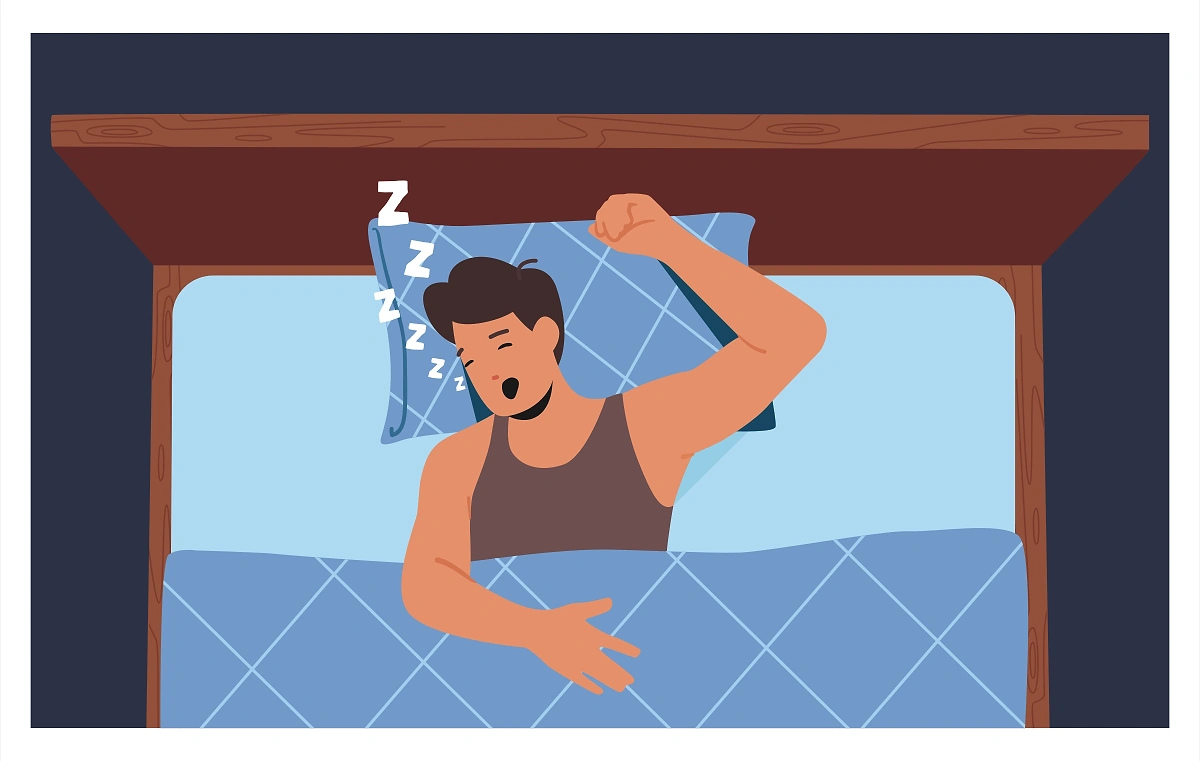
Insomnia and poor sleep quality affect an estimated 30% of adults, with profound consequences for physical health, mental wellbeing, and cognitive function (Ohayon, 2002). While sleep medications carry risks of dependency and side effects, breathing techniques offer a drug-free approach with no adverse effects and growing scientific support (Ong et al., 2014). Research demonstrates that controlled breathing can reduce the time needed to fall asleep, decrease nighttime awakenings, and improve overall sleep quality. This article explores the science of sleep breathing and provides practical techniques you can use tonight.
The Breath-Sleep Connection
Sleep onset involves a coordinated shift in autonomic nervous system activity—from the sympathetic (alert) state to parasympathetic (rest) dominance. This transition is reflected in breathing, which naturally slows from 12-20 breaths per minute during wakefulness to 6-8 breaths per minute during light sleep (Douglas et al., 1982). By consciously adopting slower breathing patterns, we can facilitate this transition rather than waiting passively for it to occur.
Why Racing Minds Keep Us Awake
Insomnia often involves physiological hyperarousal—elevated heart rate, increased muscle tension, and rapid shallow breathing—that maintains alertness despite fatigue (Bonnet & Arand, 2010). This arousal state is incompatible with sleep. Controlled breathing directly addresses this hyperarousal by activating the vagus nerve and shifting the autonomic balance toward rest.
The 4-7-8 Sleep Breath
Developed by Dr. Andrew Weil based on ancient yogic breathing, the 4-7-8 technique has become one of the most popular sleep-inducing breath patterns. Research suggests it works by engaging the parasympathetic nervous system through extended exhale and breath retention, while the counting aspect provides a focus that interrupts racing thoughts.
How to Practice
Place the tip of your tongue against the ridge behind your upper front teeth. Exhale completely through your mouth with a whoosh sound. Close your mouth and inhale quietly through your nose for 4 counts. Hold your breath for 7 counts. Exhale completely through your mouth with a whoosh for 8 counts. This is one cycle. Complete 4 cycles. If the holds feel too long initially, maintain the 4:7:8 ratio with shorter counts.
Related Articles

The Perfect Evening Wind-Down

4-7-8 Breathing: The Sleep Switch
Quieting Nighttime Anxiety
References
Bonnet, M. H., & Arand, D. L. (2010). Hyperarousal and insomnia: State of the science. Sleep Medicine Reviews, 14(1), 9-15.
Douglas, N. J., White, D. P., Pickett, C. K., Weil, J. V., & Zwillich, C. W. (1982). Respiration during sleep in normal man. Thorax, 37(11), 840-844.
Ohayon, M. M. (2002). Epidemiology of insomnia: What we know and what we still need to learn. Sleep Medicine Reviews, 6(2), 97-111.
Was this article helpful?